Every couple who searches for a Tuscany wedding has already seen the photos: cypress-lined drives, long tables under olive trees, golden light at 7pm. What the photos don't show is how the weekend actually runs, what you'll be doing at 11am on the wedding day, or why your guests will talk about Friday night as much as Saturday. This guide fills in that gap.
The single biggest difference between a Tuscany wedding and a wedding at home is duration. Because almost everyone has travelled, and because many Tuscan venues include accommodation on the property, the celebration naturally stretches across three days. A typical shape looks like this:
Friday is the welcome. Guests arrive through the afternoon, settle into villa rooms or nearby agriturismi, and gather for a relaxed dinner. In Tuscany this is often a pizza night or a rustic long-table supper with local wine, held somewhere casual like a courtyard or the terrace by the pool. This is where two families who have never met actually become one guest list.
Saturday is the wedding itself, which we'll walk through below.
Sunday is the slow goodbye. A late brunch by the pool, maybe a wine tasting or a short trip into a hill town like San Gimignano or Montepulciano, and guests peel away through the afternoon. Many couples say this is the day they finally get to speak to everyone.
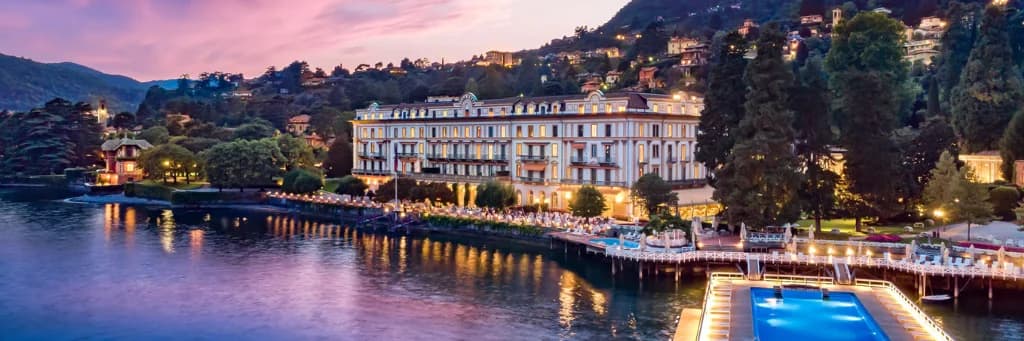
If you're comparing Italian regions, this multi-day rhythm is Tuscany's signature. A Lake Como wedding tends to feel more formal, with guests spread across hotels in the lake towns, while an Amalfi Coast wedding is built around the sea and the drama of the cliffs. Tuscany is the one where everyone stays together on one estate and the pace slows right down.

Tuscany has the widest choice of wedding-ready properties in Italy, and they fall into four broad categories. Choosing between them is the first real decision you'll make.
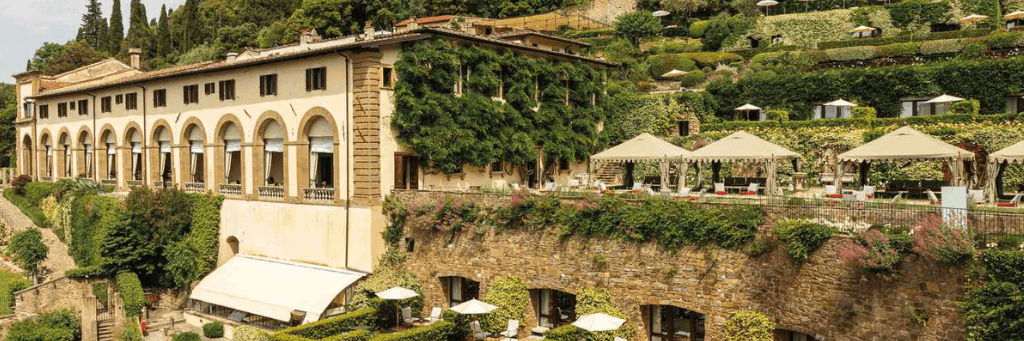
Private Villas: Renaissance to 18th-century country houses with formal gardens, often with 10 to 25 bedrooms on site. A villa wedding is the most exclusive option: the property is yours for the weekend, the ceremony happens on the lawn or in a loggia, and the reception is in the gardens. Best for couples who want privacy and control over the whole experience.
Vineyard and Wine Estates: Working wineries in Chianti, Montalcino or Montepulciano. These feel more relaxed and agricultural, with ceremonies among the vines and receptions in converted barns or cantine. The wine, naturally, is the estate's own. Guests love the authenticity; the trade-off is that accommodation is sometimes spread across several buildings or nearby villages.
Historic Borghi: Restored medieval hamlets, essentially tiny stone villages that have been converted into boutique hotels. You take over the entire borgo, so your guests sleep within the same stone walls for three days. Ceremonies often take place in the hamlet's own chapel or piazza. This is the most "transportive" option and tends to photograph beautifully.
Castles: Medieval and Renaissance castelli with towers, battlements and vast halls. Castles bring scale and theatre, and they offer the best wet-weather backup because the indoor spaces are genuinely grand rather than an afterthought. They suit larger guest counts and couples who want a sense of occasion.
The curated Tuscany wedding venue collection breaks these down property by property.

Here is what Saturday typically looks like at a Tuscan villa or estate:
9am to 12pm: A leisurely breakfast with whoever is awake. Hair and makeup teams arrive for the couple and wedding party. Whoever isn't in the makeup chair usually ends up by the pool.
12pm to 3pm: Lunch is light and early. Florists and the planner's team are now in full flow across the property, and there is a quiet hum of setup around you.
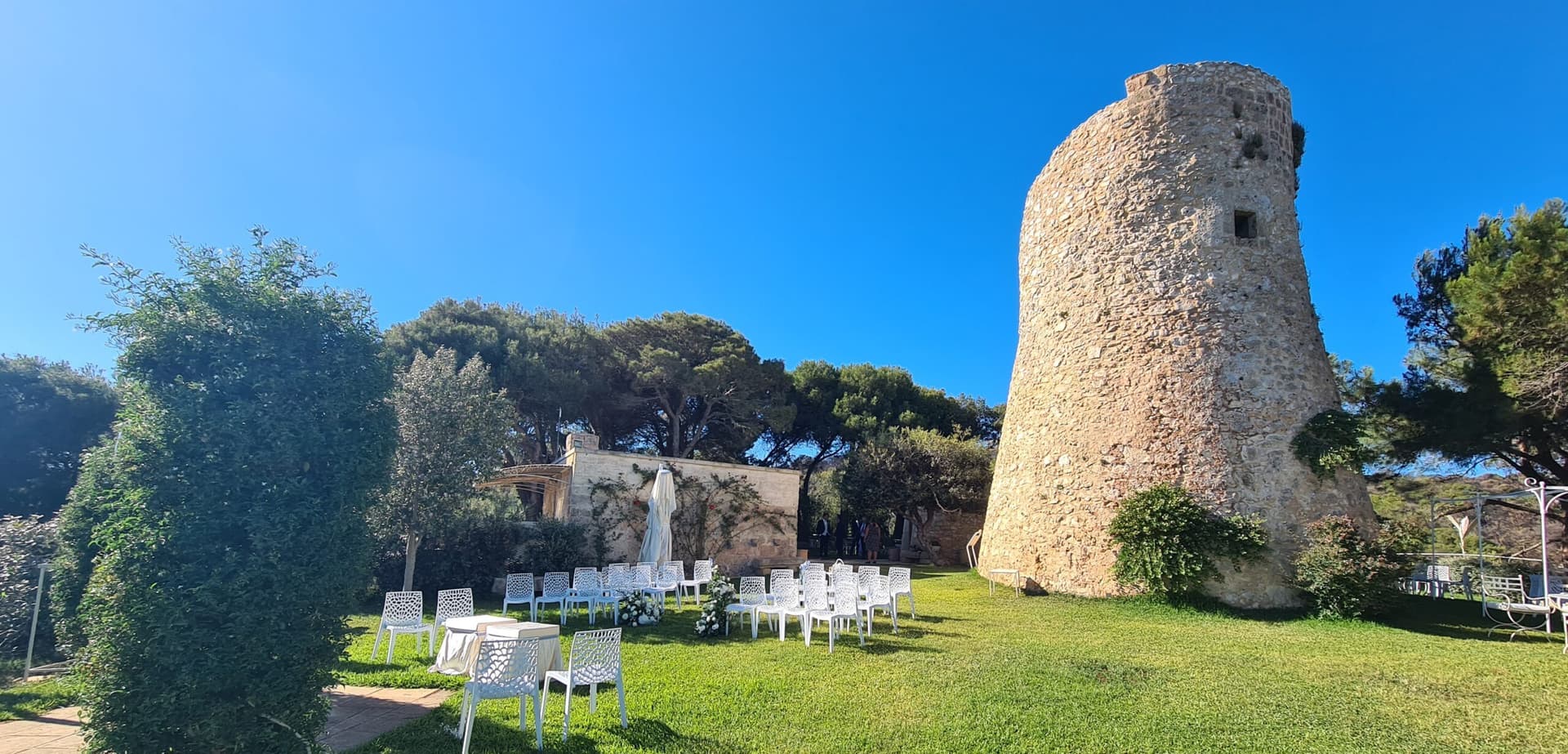
4:30pm to 5pm: This is when the ceremony starts. In high summer it often shifts to 5:30pm or later because of the heat. Outdoor ceremonies in Tuscany are short, usually 30 to 40 minutes.
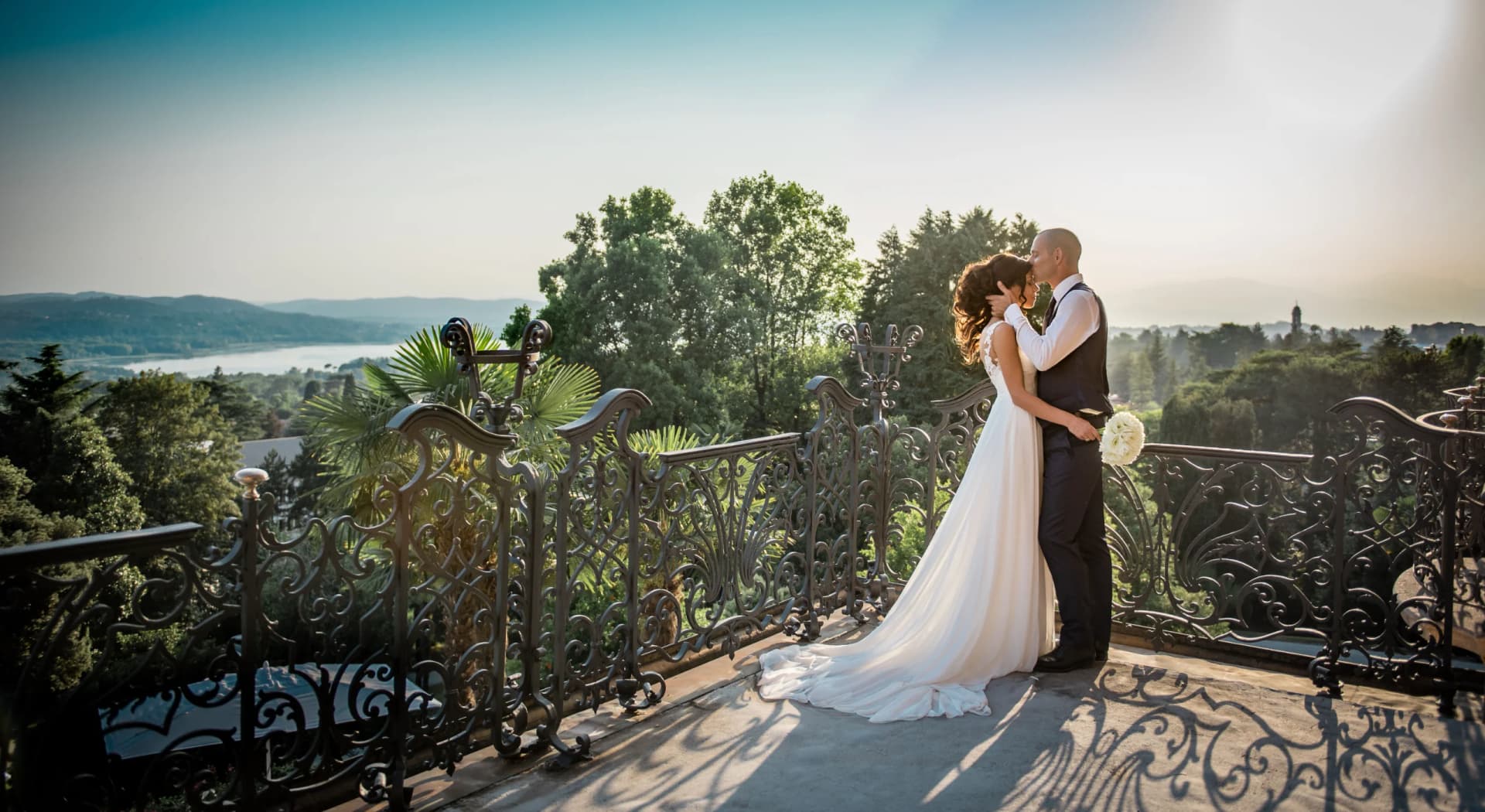
5pm to 7pm: Time for the aperitivo, the heart of the Tuscan wedding experience. Prosecco, Aperol spritz, local cheeses, cured meats and fried zucchini flowers served on a terrace as the light turns gold. Guests mingle, the couple does portraits in the olive grove, and this is when everyone takes the photos they'll keep.
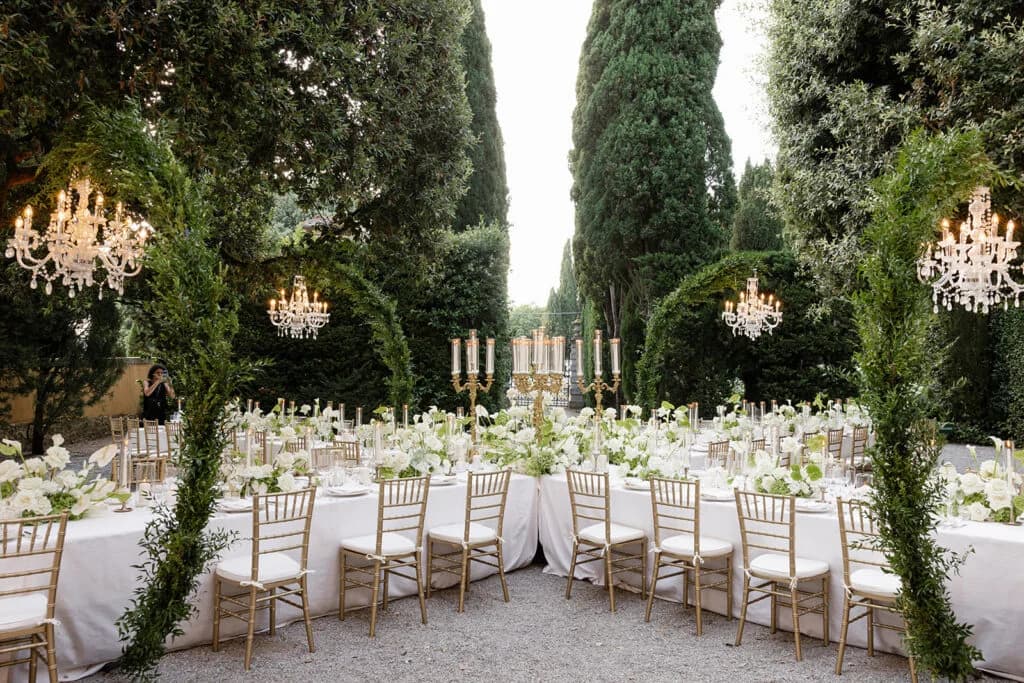
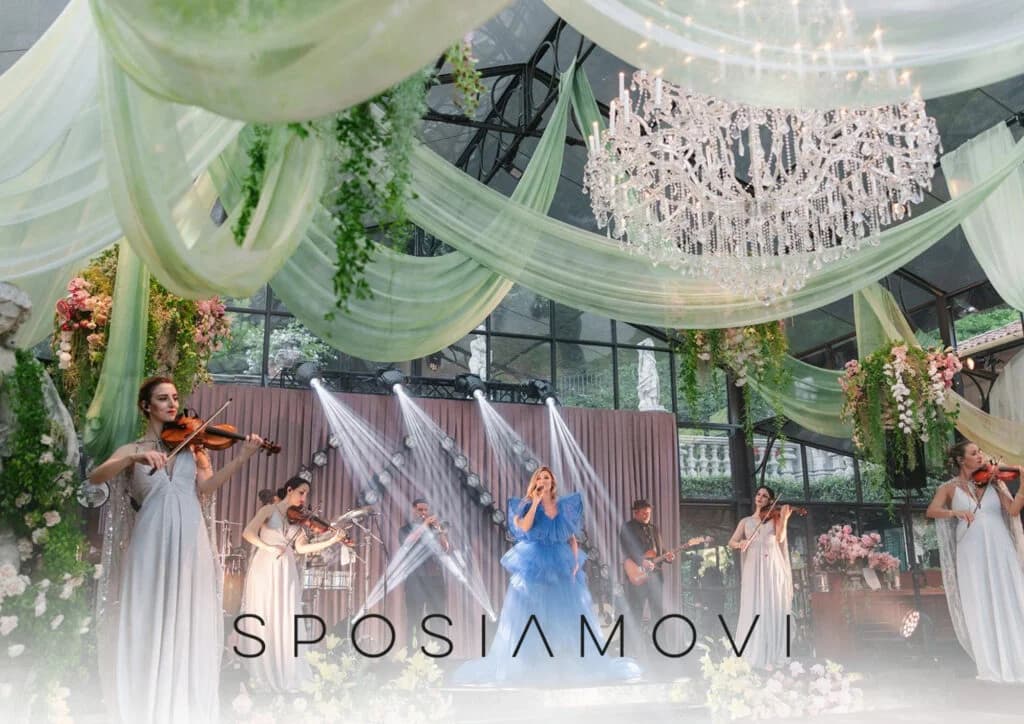
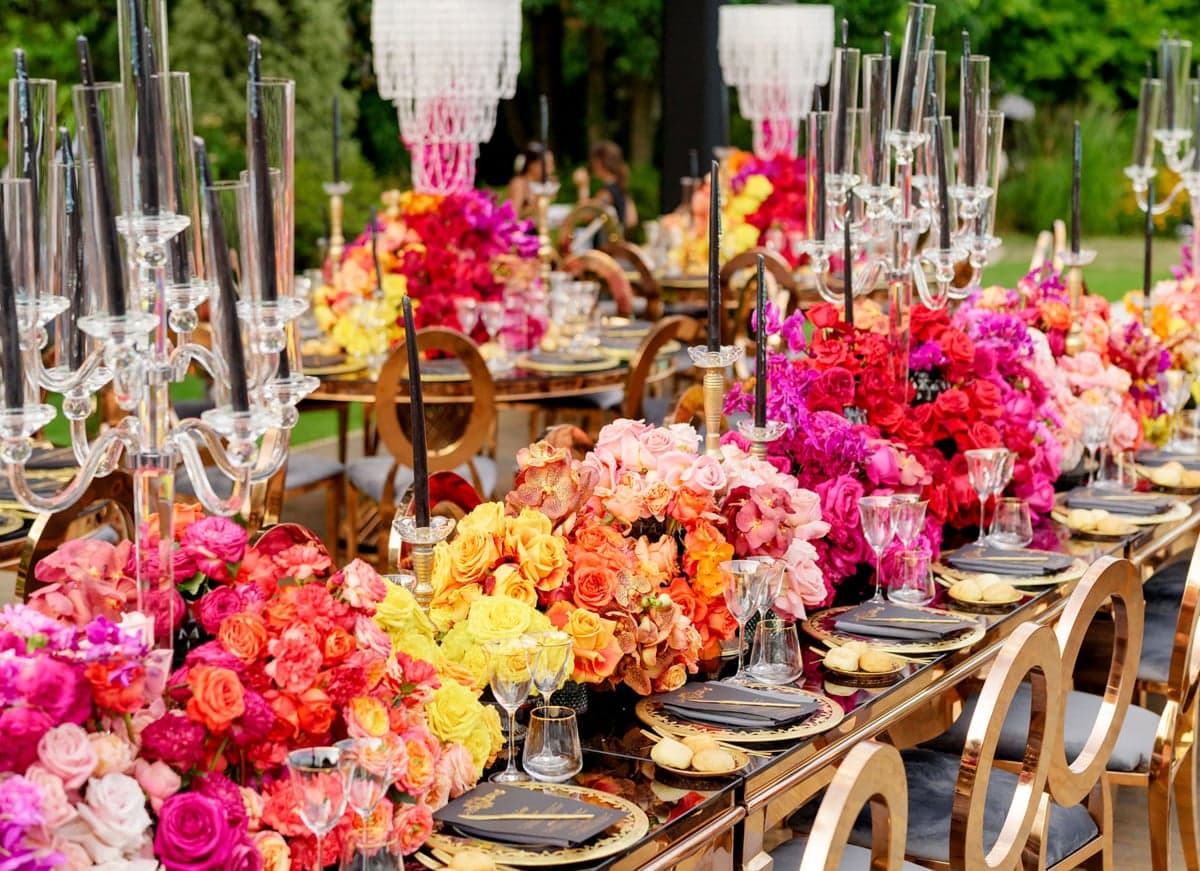
7:30pm to 10pm: Then, there's dinner. Long tables under the trees or in a courtyard, usually a four-course Tuscan menu: antipasti, a pasta course, a grilled meat or fish secondo, then dessert. Speeches happen between courses rather than all at once. The cake is cut around 10pm, often followed by sparklers or fireworks.
10:30pm to 1am: Dancing time. Many Tuscan properties have a designated indoor or semi-enclosed area for the party, because many municipalities impose a midnight or 1am curfew on amplified outdoor music. A good planner will have this sorted before you sign.
The day is built around light and food rather than a rigid schedule, which is a big part of why guests describe it as relaxed even when 80 people are involved.
Tuscany sits at the upper end of Italian wedding destinations. A luxury Tuscany wedding for 60 to 80 guests typically starts around EUR 60,000 to 90,000, and multi-day celebrations at the most sought-after villas can go well beyond that.
Where the money goes, roughly in order:
Venue Hire and Accommodation: Most properties charge a weekend exclusivity fee plus room rates. This is the largest single line item.
Catering and Wine: Italian catering is priced per head and usually covers the aperitivo and multi-course dinner, with Friday and Sunday meals quoted on top.
Planning and Production: A local planner is close to essential for permits, suppliers and language. Expect either a percentage of the budget or a flat fee.
Florals and Design: Tuscany rewards a loose, garden-style aesthetic, which can be more affordable than structured floral walls, but tablescapes for long tables add up.
Photography, Video, Music and Transport: Guest shuttles between accommodation and venue are a real cost that couples often forget. For context, the Italy wedding hub compares regional costs, and the Lake Como wedding cost guide is a useful benchmark if you're weighing Tuscany against the lake.
For context, the Italy wedding hub compares regional costs, and the Lake Como wedding cost guide is a useful benchmark if you're weighing Tuscany against the lake.
May, June, September and early October are the sweet spots. The weather is warm but not punishing, the landscape is green (May to June) or golden (September to October), and the light is at its best.
July and August are peak season and hot, regularly above 30 degrees and past 35 during heatwaves. Weddings still happen, but ceremonies shift to 6pm and you'll want shade, fans and a lot of water for guests.
April and late October are quieter and cheaper, with a higher chance of rain. If you choose a castle or a villa with strong indoor spaces, the risk is manageable.
November to March is off-season. Many estates close, but a winter wedding in a Tuscan castle with fireplaces and truffle season is an underrated option for smaller groups.
There are a few realities that rarely make it into the inspiration posts:
Distances feel longer than they look. Tuscany is rural. A venue "near Florence" can be 50 minutes away on winding roads, so plan guest transport carefully and don't assume taxis.
The heat shapes everything. Summer ceremony times, menu choices, even the dress fabric. Trust local suppliers on timing.
Noise curfews are real. Confirm the music cut-off before you book, not after.
Guests will want to extend their trip. Florence, Siena, Pisa and the coast are all within reach. Build a short guide into your wedding website.
It is less stressful than a wedding at home. This is the surprise couples mention most. With everyone on one property and a planner running the weekend, the couple actually gets to be present.
The right order is venue first, then date, then everything else, because the property dictates guest count, accommodation and much of the budget. Most couples book 12 to 18 months out, and the best weekends in June and September go first.
If you'd like help, a Wedded Wonderland advisor can shortlist Tuscan villas, estates and borghi that match your guest count and budget, and connect you with vetted local planners who handle the paperwork and suppliers. Start on the Tuscany wedding page or explore the wider Italy destination guide to compare regions.
Written by

SEO Specialist
Ayrton Christian Braga is an SEO Specialist at Wedded Wonderland, where he writes optimized articles and web pages that center on destination weddings, cultural wedding traditions, and guides for everything in between.
Search real weddings, venues and vendors from around the world.
Search Wedded Wonderland