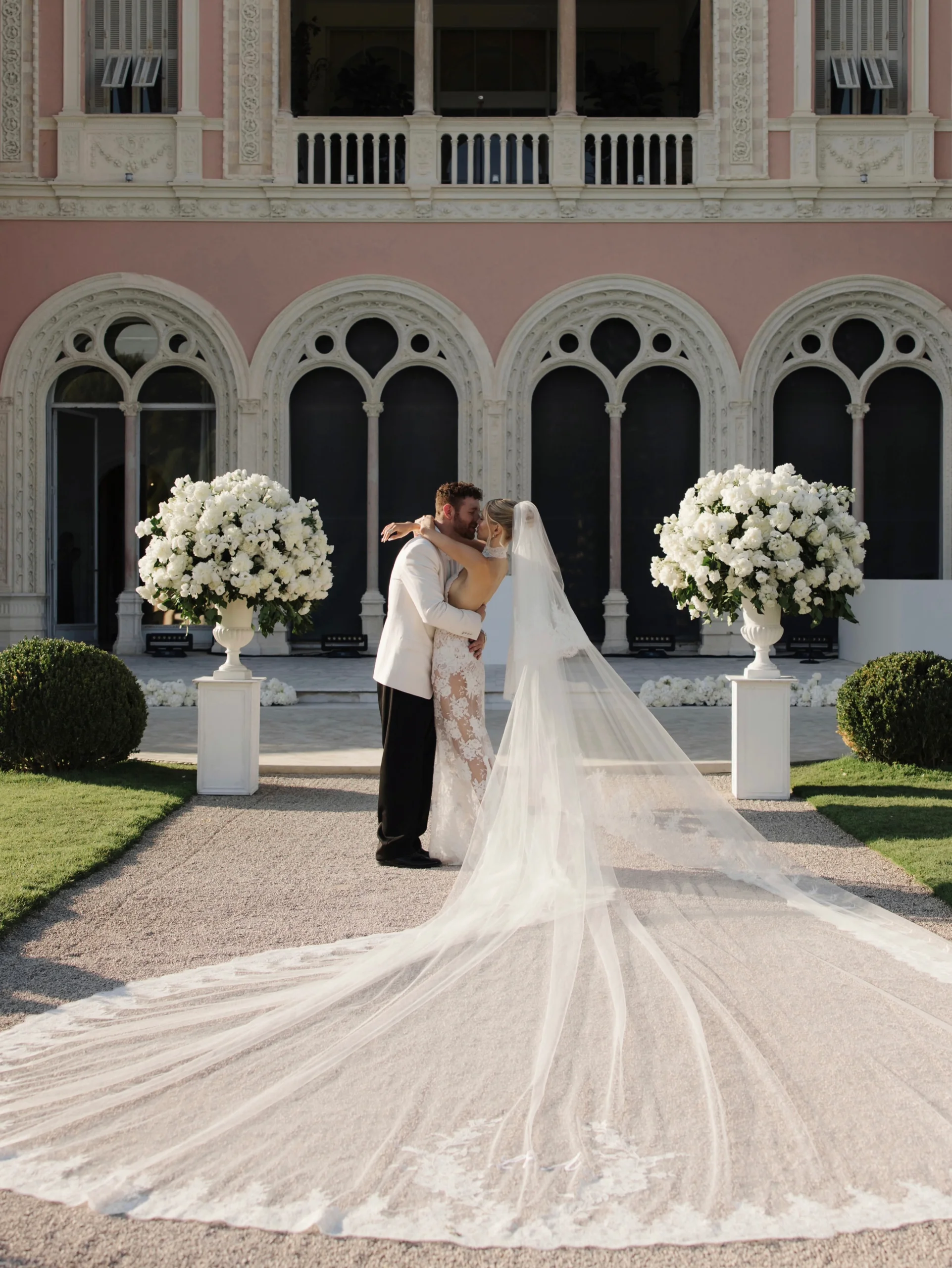
A castle overlooking the countryside, a candlelit ballroom, a secluded garden or a villa beside the sea. Every couple has a version of the wedding setting they cannot stop imagining. But have you ever wondered why one particular place feels so right, even before you have chosen the flowers, the dress or the date?
Welcome to The Wedding Venue Theory, the idea that the setting we envision for our wedding may say more about us than our Pinterest boards let on. Beyond architecture, aesthetics and impressive views, a venue can reflect our identities, emotional needs, personal histories and aspirations for the life we hope to build together.
And when it comes to finding a place that captures all of that, the right guidance can make a difference. Through Wonderland Concierge, couples can connect with trusted wedding professionals to help discover venues and experiences that feel aligned with their vision, not simply beautiful in photographs.
Think about the settings you are naturally drawn to. Perhaps you gravitate towards an architectural estate with dramatic interiors, or maybe your idea of perfection involves an intimate celebration surrounded by trees and open skies.
This could be connected to place identity, a psychological concept explored by researchers Orestis Droseltis and Vivian Vignoles in their 2010 study on how people identify with places. Their research examined how environments can connect with our sense of self, personal values and desire for belonging.
Applied to weddings, this offers an interesting perspective: the venue might feel right because it reflects something about who you are. A minimalist setting may appeal to a couple who values simplicity, while a historic estate might resonate with those drawn to tradition, heritage and timeless design.
The question is not simply whether you like how a venue looks. It is whether you can see yourselves in it.
Close your eyes and imagine walking into your wedding reception. What do you want to feel?
Do you picture the warmth of an intimate dinner, the excitement of a lively celebration or the tranquillity of an outdoor ceremony at sunset?
The atmosphere of a venue plays a significant role in shaping the experience. Its lighting, surroundings, architecture and even the way guests move through the space can influence how a celebration feels.
This connects with place attachment, a concept explored by environmental psychologists Leila Scannell and Robert Gifford. Their 2010 framework examines the emotional, cognitive and behavioural connections people develop with meaningful places.
In a wedding context, this makes the venue more than somewhere to exchange vows. It becomes the setting for an experience you want to carry with you long after the last song.
Sometimes, the venue you love reflects not only your present lifestyle but also the future you imagine.
A couple dreaming of a destination wedding in Tuscany might be drawn to the idea of slow afternoons, long dinners and a life filled with travel. Another might envision a grand city celebration that reflects their appreciation for art, culture and a more cosmopolitan lifestyle.
This is where self-congruity theory comes into the picture. In consumer psychology, the concept explores how people gravitate towards products and experiences that align with their actual or ideal self-image.
The same idea offers an interesting way to look at wedding venues. Perhaps you are not just choosing a location for the wedding you are having. You are also imagining the kind of life you want to share after it.
There is a reason certain places feel special before anything has even happened there. Perhaps a garden reminds you of childhood summers, a coastal town brings back memories of your first holiday together, or a historic property feels familiar because it resembles somewhere you have always loved.
Personal associations can influence how we experience a place. Scannell and Gifford's research on place attachment highlights how individual and shared meanings contribute to the connections people form with particular environments.
For couples, this can mean choosing somewhere that holds a shared memory, reflects their cultural background or creates an entirely new tradition for their family.
The venue becomes part of the story, not just the location where the photographs were taken.
The Wedding Venue Theory is not a personality test, nor does choosing a ballroom automatically make you one kind of person and a garden bride another. It is an invitation to think more intentionally about the places we choose and the meanings we attach to them.
Because the most beautiful venue is not necessarily the grandest, the most expensive or the one currently filling your social media feed. It is the one that makes you feel connected to the celebration you want to have and the future you are building together.
Search real weddings, venues and vendors from around the world.
Search Wedded Wonderland