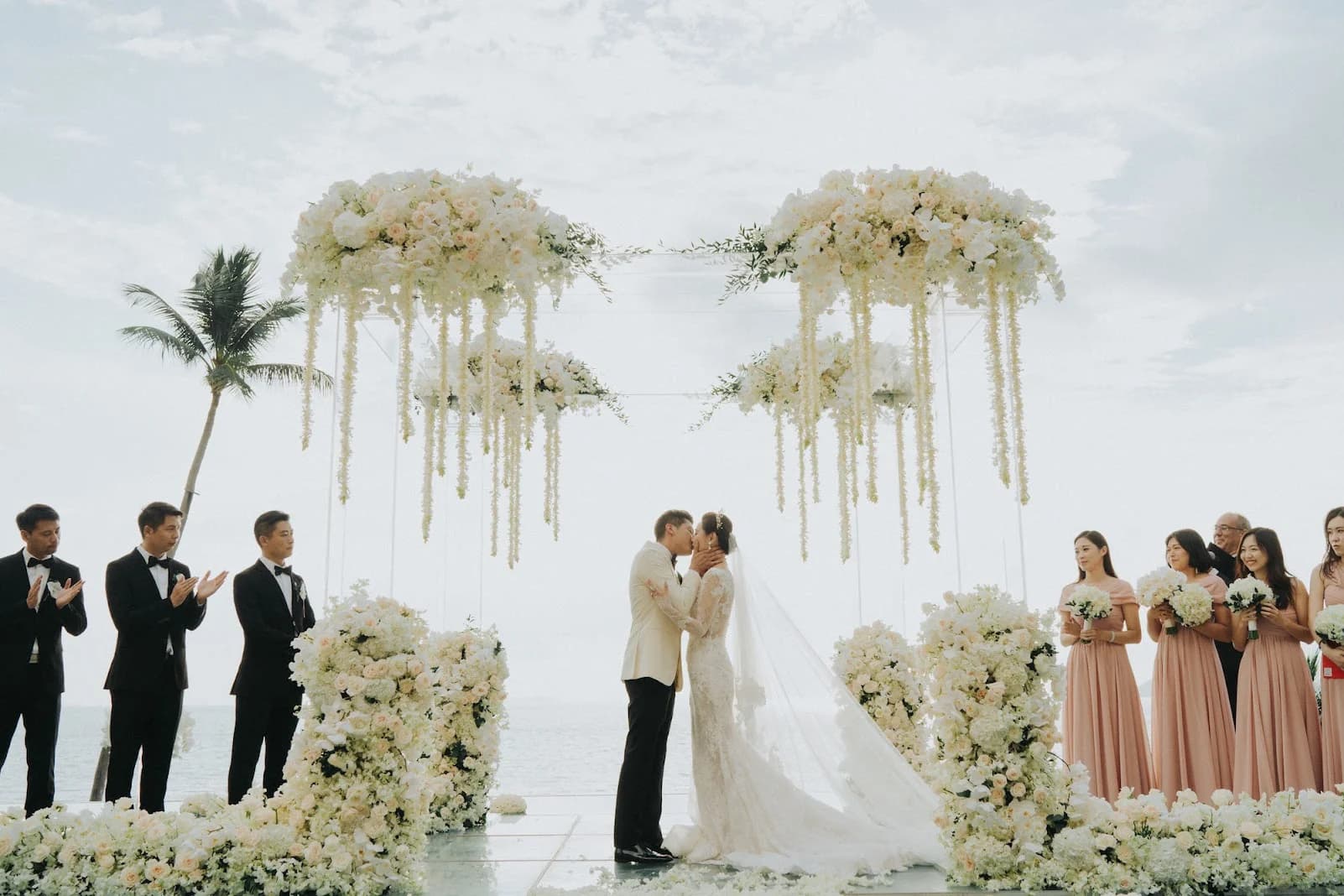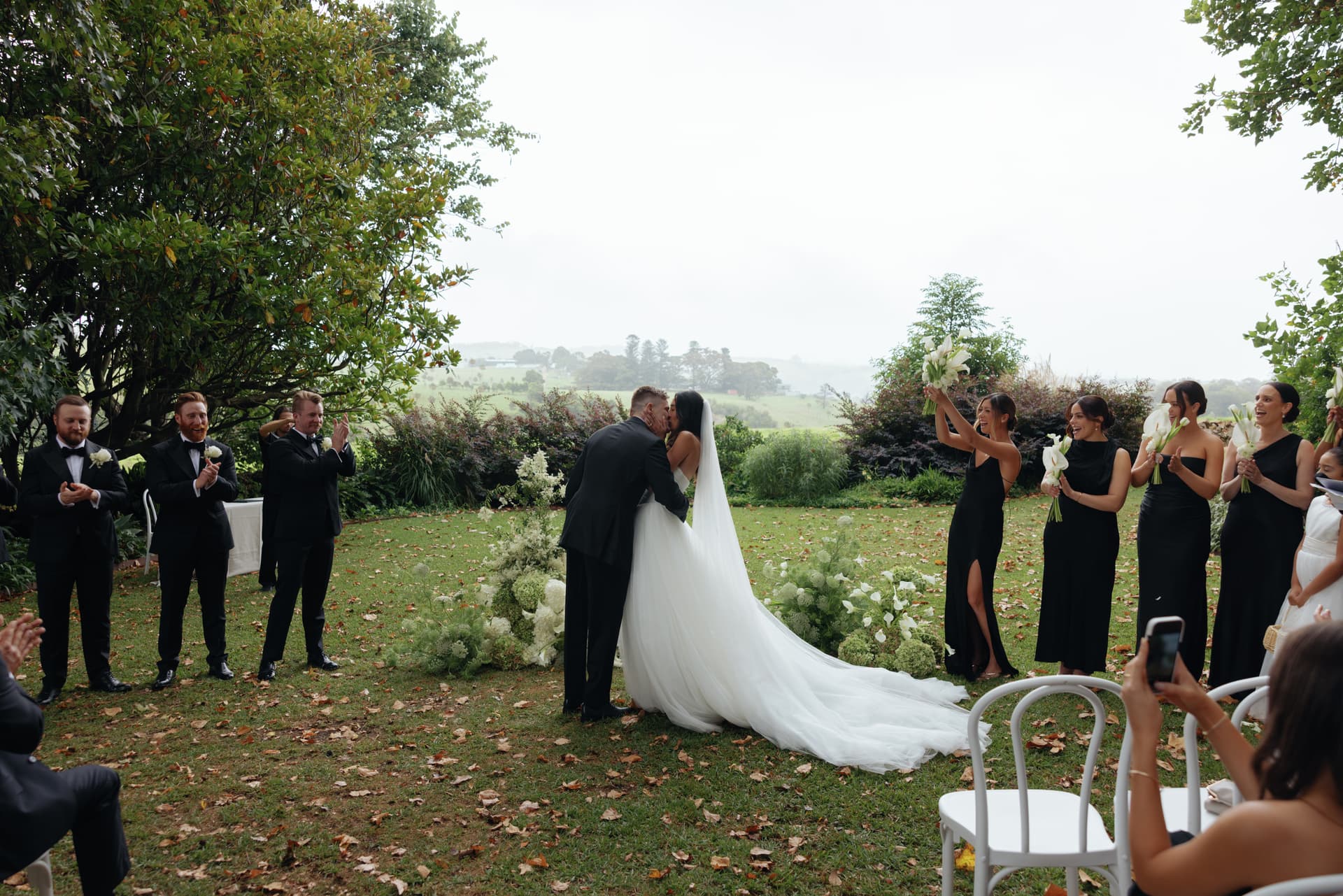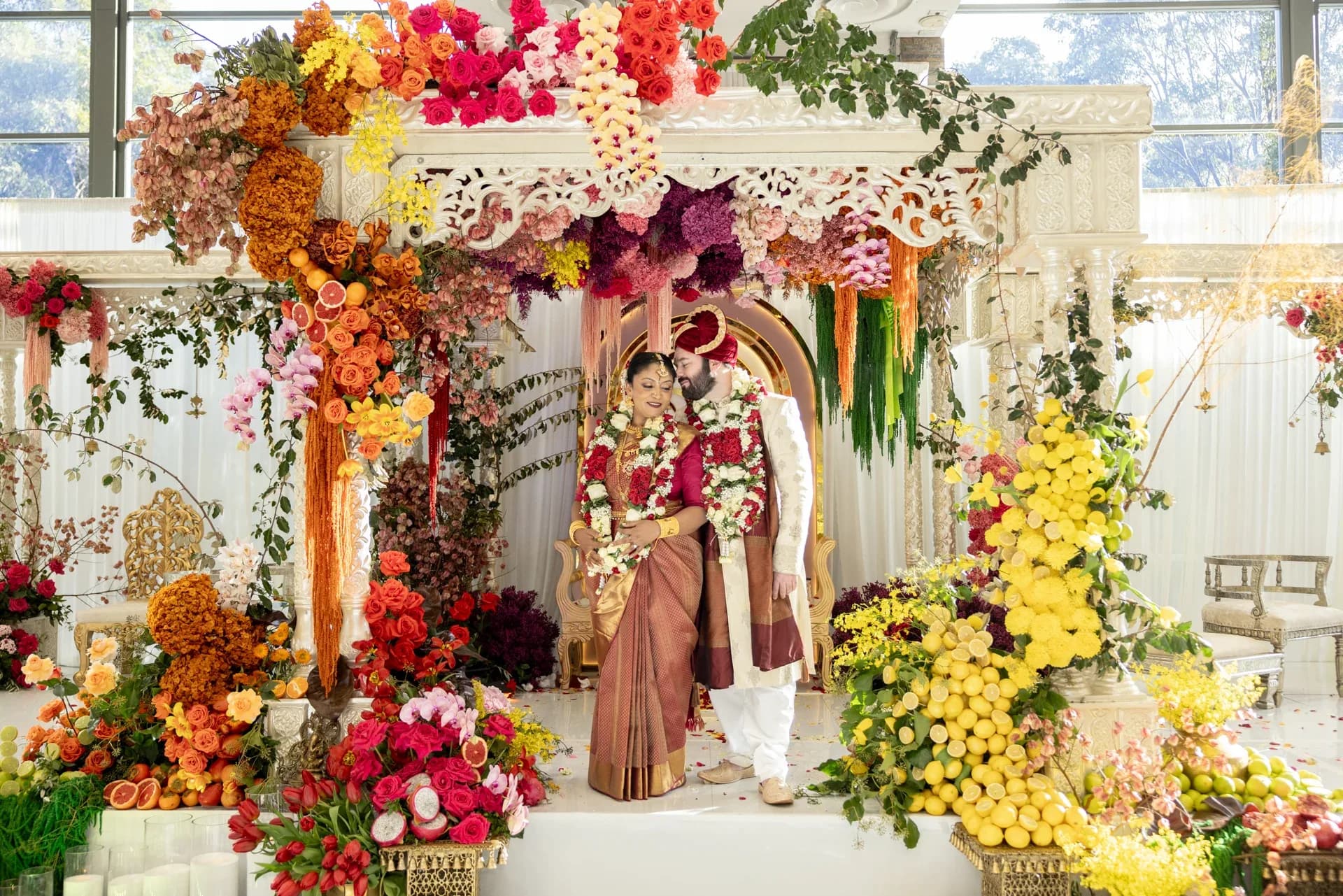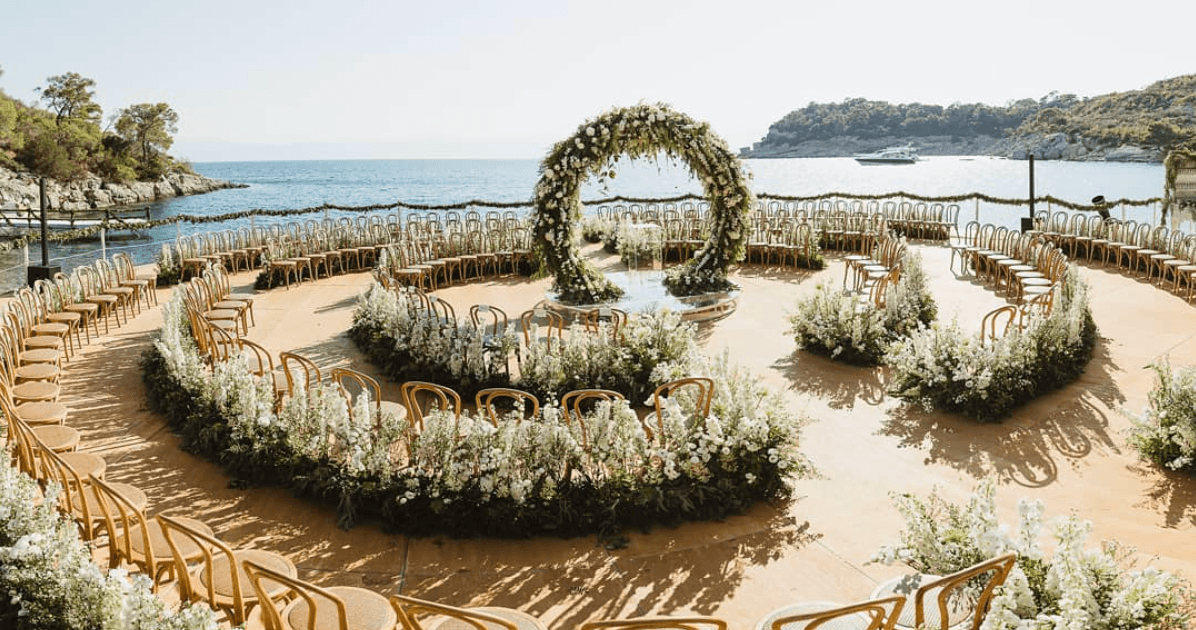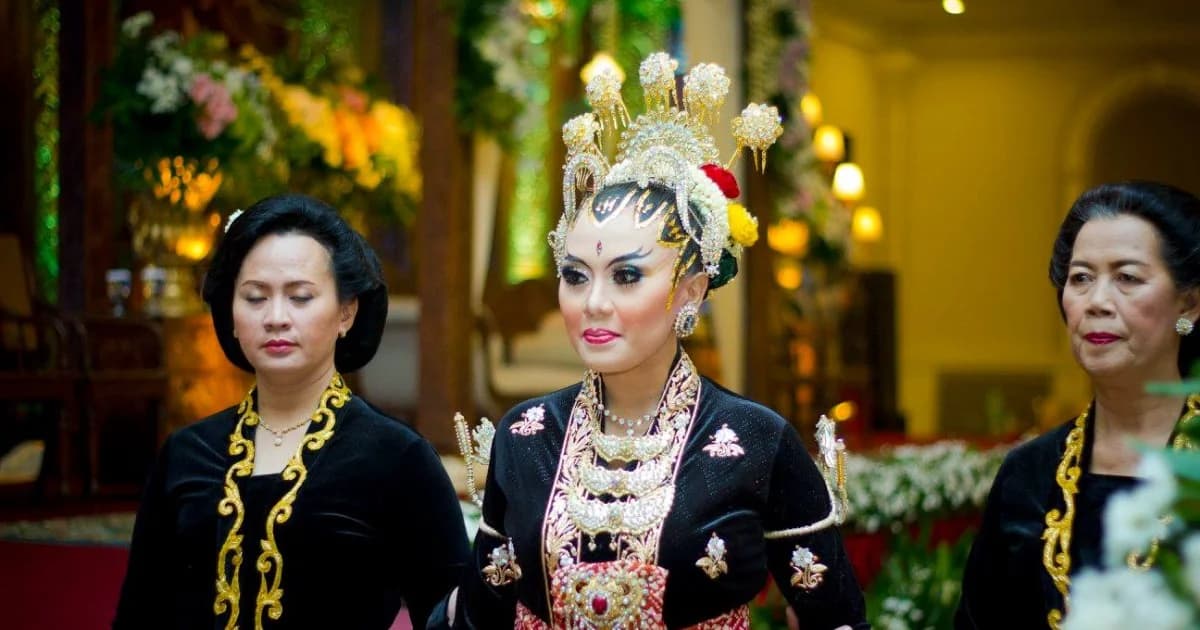
A Javanese wedding is not one ceremony. It is a sequence that can begin months before the day and close with a couple kneeling before their parents. At Wedded Wonderland, we walk through 12 Javanese wedding traditions in the order they happen. Customs vary by family, faith and region, so we flag where a detail comes from the royal palace in Yogyakarta.
The Kraton Yogyakarta, the Sultan's palace, describes marriage as one of three key passages in Javanese life, alongside birth and death. It divides a Javanese marriage into three stages: pre-wedding, wedding and post-wedding.
The same page notes that many ceremonies are now shortened or left out for cost or practicality, while the palace still holds them in full. Few families hold every step.
On its page about royal weddings, the Kraton Ngayogyakarta Hadiningrat says the bride's side hosts the wedding in Javanese tradition. Its royal order runs from lamaran through pasang tarub, nyantri, siraman, midodareni, the akad nikah and panggih, to the reception and farewell.
For family practice, a clear record is the culture page of Girikerto village in Sleman, near Yogyakarta: a local account, not a rule for all of Java. For the wider picture across the archipelago, read our guide to Indonesian wedding traditions, or start with wedding traditions from around the world.
The pre-wedding customs carry the most variation between families. Read these as a map, then ask each side which steps they keep.
In the Girikerto record, nontoni is the first step towards marriage, a ceremony for seeing the prospective partner. Ask each family what form it takes today.
It is often told that families consult the Javanese calendar and weton, the day of birth, when setting a date, so ask before you hold any dates.
Lamaran comes after nontoni, once the young man accepts his parents' choice, and if the proposal is accepted the bride's parents send an envoy back with their answer. The palace describes the same step from the groom's side: the lamaran shows the seriousness of his intentions, and once it is accepted the wedding date, the steps and the people involved are set.
If you are planning from Australia, expect the date may be set here, by the families, rather than by you and a venue.
Peningsetan comes from singset, meaning to tie, so a peningset is a binder; in the Girikerto order it is the fourth step, after the answer to the proposal arrives. A 2022 study in Jurnal Sastra Indonesia notes that peningsetan is commonly called seserahan and has become a usual part of weddings in Indonesia.
Families often say the groom's side brings cloth, a ring and foods on trays; what goes in is for the two families to settle, not a stylist.
Putting up the tarub at the gateway of the bride's family home opens the series of ceremonies and tells the neighbourhood that the household is about to hold a wedding. In the palace account, a bleketepe woven from young coconut leaf is put up on the roof, while curved janur decorations and tuwuhan, a set of particular plants, leaves and seeds, are placed at several spots.
At court, the officials organising the event hang the bleketepe. In family homes, who does it is a matter of family custom.
The same 2022 study found that in the community it looked at, the tarub now stands only at the kitchen area, wedding tents take the front, and plastic flowers have replaced some decoration. At a hired villa or hotel, agree early where the janur and plants will go and who installs them.
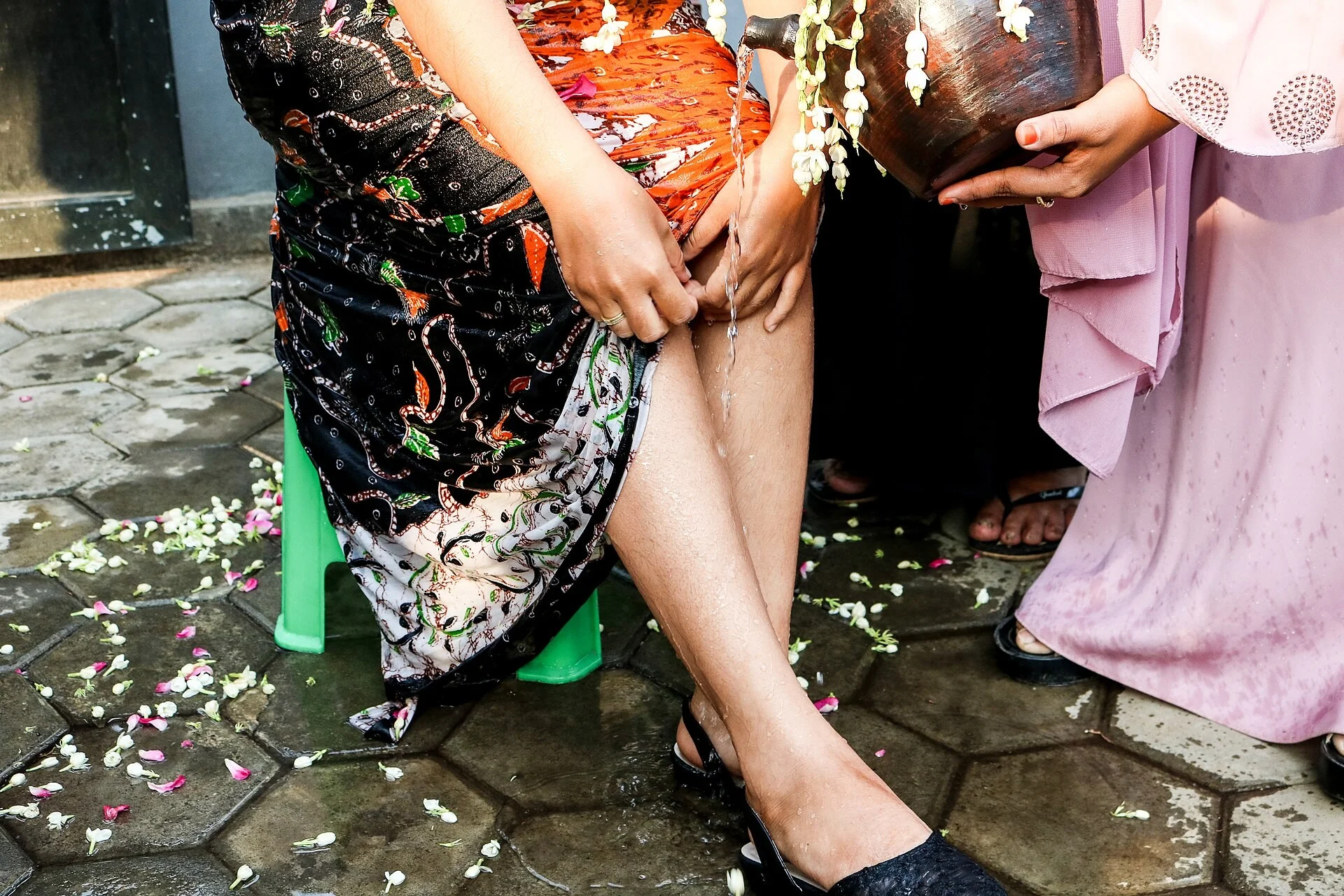
The palace describes siraman as a bath for the bride and groom that purifies body and spirit. Her mother, the groom's mother and the bride's senior relatives pour the water as a blessing; she goes first, and the two are bathed apart. A study in the journal Walisongo places it one day before the ijab qabul and describes its procedure and equipment as fixed, each carrying symbolic meaning.
At court, the bride is bathed with water from seven springs mixed with flowers, and that water and the relatives then move to the groom's siraman. That is royal practice, not a family rule.
In the Girikerto record, adol dawet, the selling of dawet, follows the siraman. For a destination wedding, plan two private bathing spaces and a gap in the run sheet so elders can move between them.
Nyantri, in the Girikerto record, means entrusting the groom-to-be to the bride's family for one to two days before the wedding. At the palace, the groom and his family are brought by horse carriage to the Kasatriyan, the men's quarters.
At the palace, midodareni falls on the eve of the core rites, a request from the bride for a smooth day to follow. The word draws on bidadari, a heavenly nymph, and the palace links it to the story of Jaka Tarub, who asked the nymph Nawangwulan to come down and dress their daughter on the eve of her wedding.
The village record sets it between 6pm and midnight, with advice, counsel and prayers, and the couple are expected to stay awake. It is a quiet family evening, not a hen's or buck's night. Keep guest entertainment for another night, and warn the families before booking an early call the next morning.
The day has a religious core and a cultural one: the first makes you married, the second celebrates it. Here is how each part runs, from the vow to the first rites as a couple.
For Muslim couples, the palace calls the akad nikah the core rite that makes the couple husband and wife, the moment the ijab qobul is spoken. It is a set exchange, not a place for vows you write yourselves.
At court the akad is held in Masjid Panepen, attended by men only, with the Sultan himself marrying off his daughter. Couples of other faiths follow their own rite. For who must be present and what is required, ask the officiant or the KUA, the Office of Religious Affairs; our guide to the nikah ceremony explains the Islamic rite in more depth.
In the Girikerto record, panggih unites the pair as husband and wife after the religious and civil steps. In some weddings an MC narrates the rite in poetic Javanese, and a Widyaparwa study of this Surakarta-style narration found similes of beauty and wishes for the couple.
The palace gives its own order.
Balangan gantal. The groom carries four rolled betel leaves and the bride three, and he throws first, slowly. It is often told whoever lands first will love more.
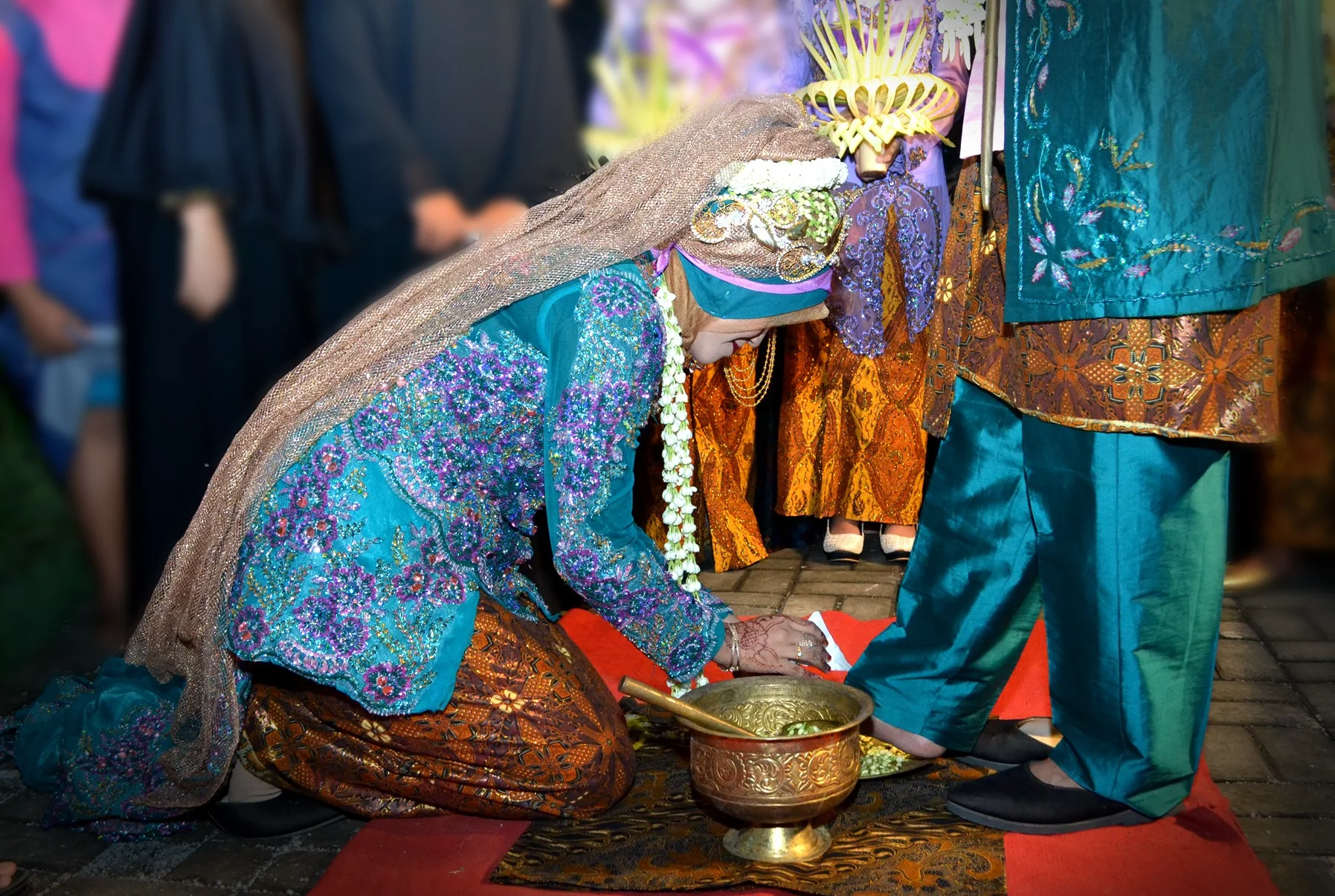
Foot washing and the egg. The bride washes the groom's feet, then an egg is broken. Many families say the groom treads on it, a step known as ngidak endog or wiji dadi.
Pondongan. In the royal version only, the groom and the bride's uncle lift the bride to shoulder height to honour her as the Sultan's daughter.
Tampa kaya. The bride receives coins and grains poured out by the groom, read by the palace as his duty to provide.
Dhahar klimah. The couple share a meal; the groom forms three balls of rice with side dishes and gives them to the bride.
It is often told that a sindur cloth is draped over the couple as the bride's parents lead them forward (sindur binayang), and that the bride's father takes both on his lap in a step called timbang or pangkon. Outside the palace, tampa kaya and dhahar klimah are often called kacar-kucur and dulangan.
Agree the order with both families, and with whoever leads the rites, before the MC's script is written.
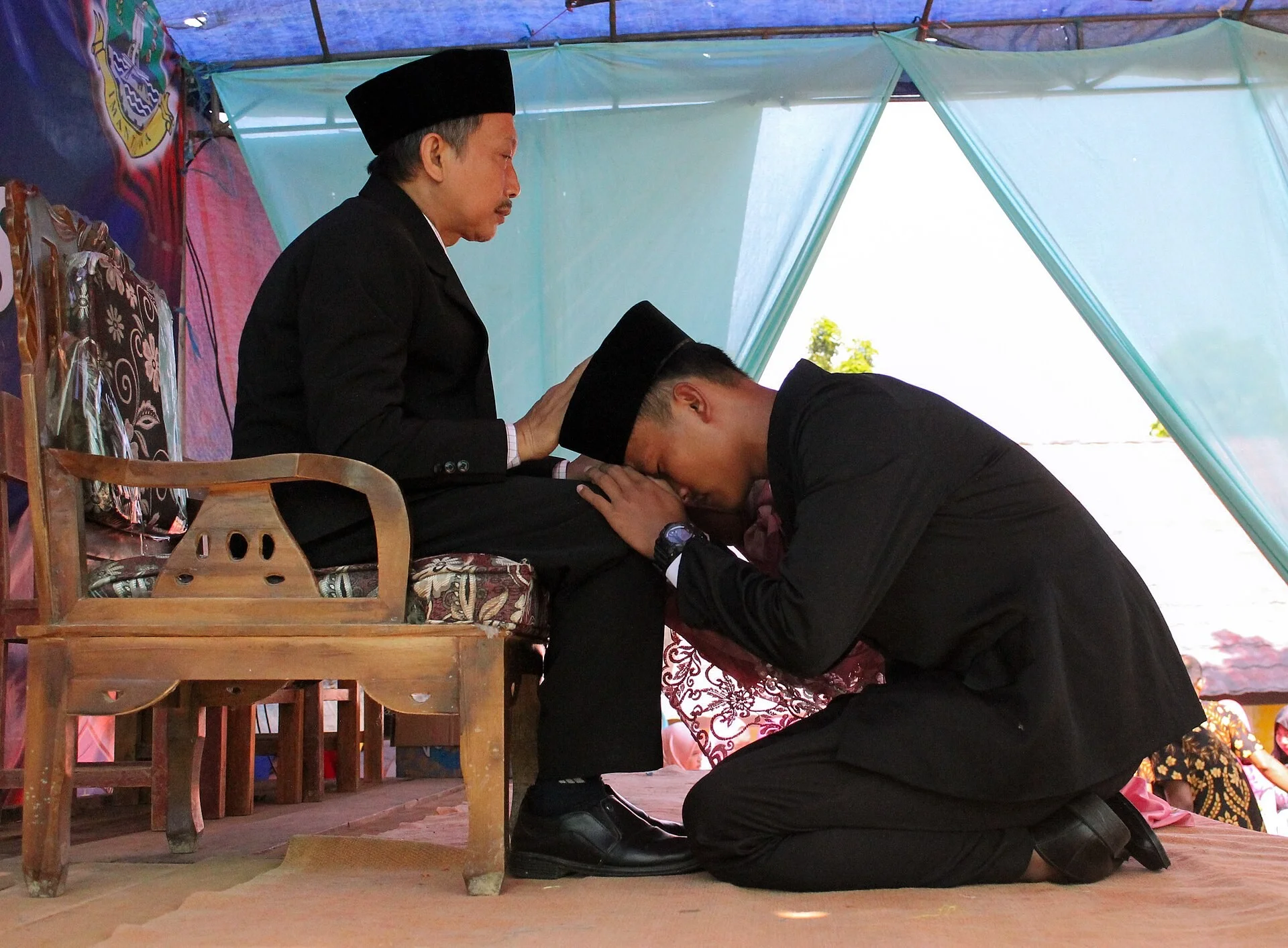
At the palace, the groom performs sungkeman to the Sultan straight after the ijab qobul, as a mark of respect and to ask for his blessing. That is the royal form.
In family weddings, the couple kneel before their elders. A 2023 study in Jurnal Sustainable describes sungkeman in the wedding rite as honouring parents, parents-in-law and even grandparents, and asking their blessing for a lasting marriage. Where it sits in the day varies, so place it where both families expect it.
The Girikerto record closes the sequence with ngundhuh mantu, a post-wedding step.
What a Javanese bride wears depends on her family, region and the formality of the day, and the sources here are thinner. Two parts follow: the bride's makeup and dress, then the groom's batik and formal wear.
In the palace account, paes ageng starts the day before: after siraman, the fine hairs on the bride's forehead and nape are shaved to create the cengkorongan, the outline for the paes ageng makeup. The Yogyakarta provincial culture office lists a reception dress in which the bride wears busana keprabon with full paes ageng makeup.
The specialist who applies it is often called a juru paes. Book them early and allow time on the eve of the wedding, not just the morning.
Yogyakarta and Solo, the old court city of Surakarta, each have their own bridal styles. It is often told that Solo brides choose between styles known as Solo Putri and Solo Basahan, and that the forehead shapes and cloth differ from Yogyakarta's.
We have not found an official source that sets out those differences. A juru paes trained in either tradition can show you their own work in each style, the most reliable comparison you will get.
UNESCO inscribed Indonesian batik on its Representative List of the Intangible Cultural Heritage of Humanity in 2009. Its description says special varieties are incorporated into celebrations of marriage and pregnancy, and that the craft uses dots and lines of hot wax that resist dye. A 2024 literature review published by Atlantis Press reads batik in Javanese wedding processions as hopes and prayers from the bride and her family for the household.
It is often told that parents wear truntum and the couple sido mukti. A 2026 paper in the journal DESILLES reads truntum as the parents' cloth in the film Kartini: Princess of Java.
For the groom, the Yogyakarta culture office lists a kuluk headdress with formal reception dress. It is often told that grooms wear a beskap jacket and blangkon at other points.
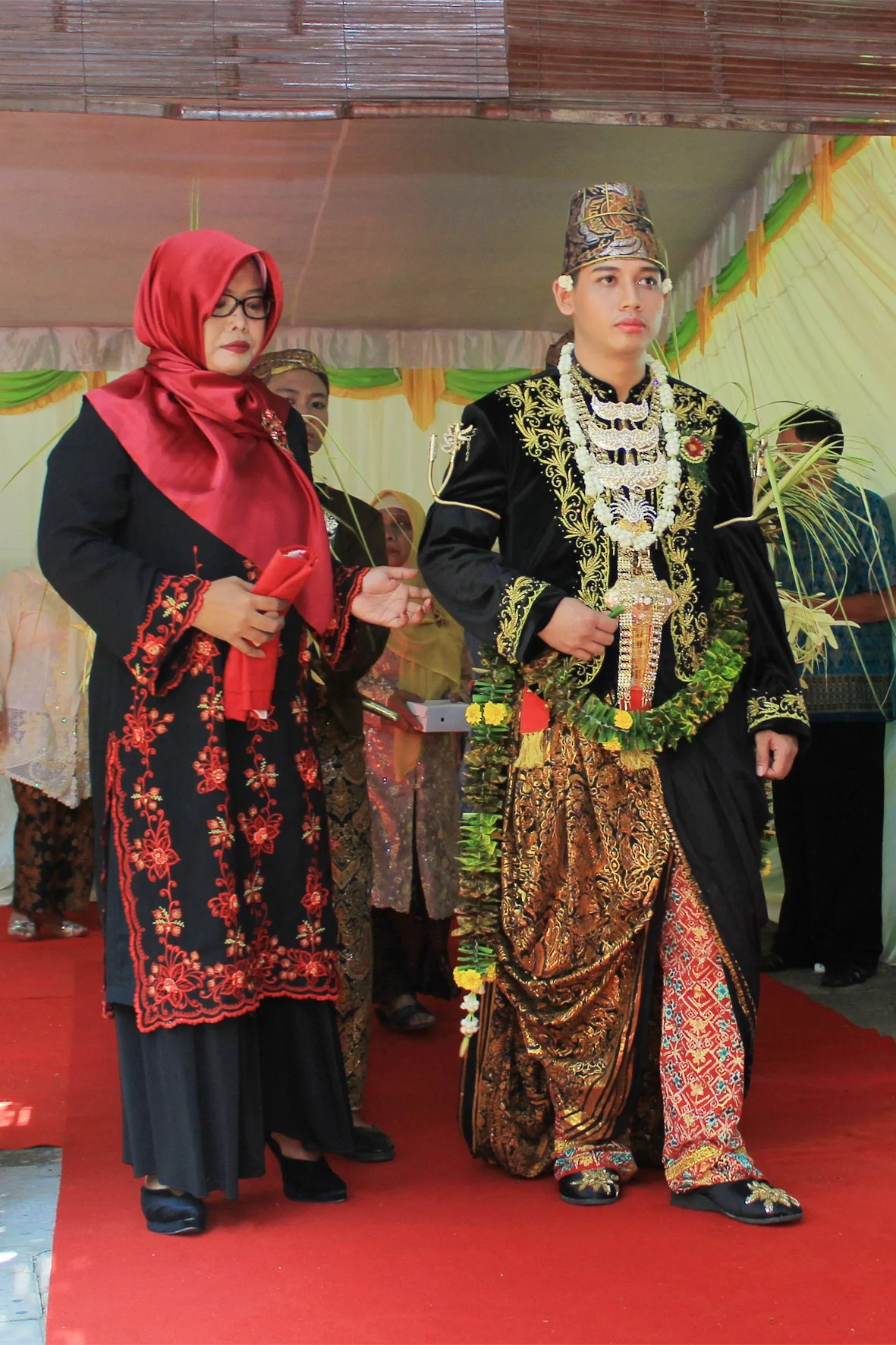
Most Javanese weddings today sit somewhere between the full court sequence and a single afternoon. The palace itself says ceremonies are being shortened or left out for cost or practicality. Families combine steps, swap the tarub for a tent, or keep only the akad, panggih and sungkeman.
There is no wrong answer, only an unagreed one: ask which steps matter most, and who should lead each.
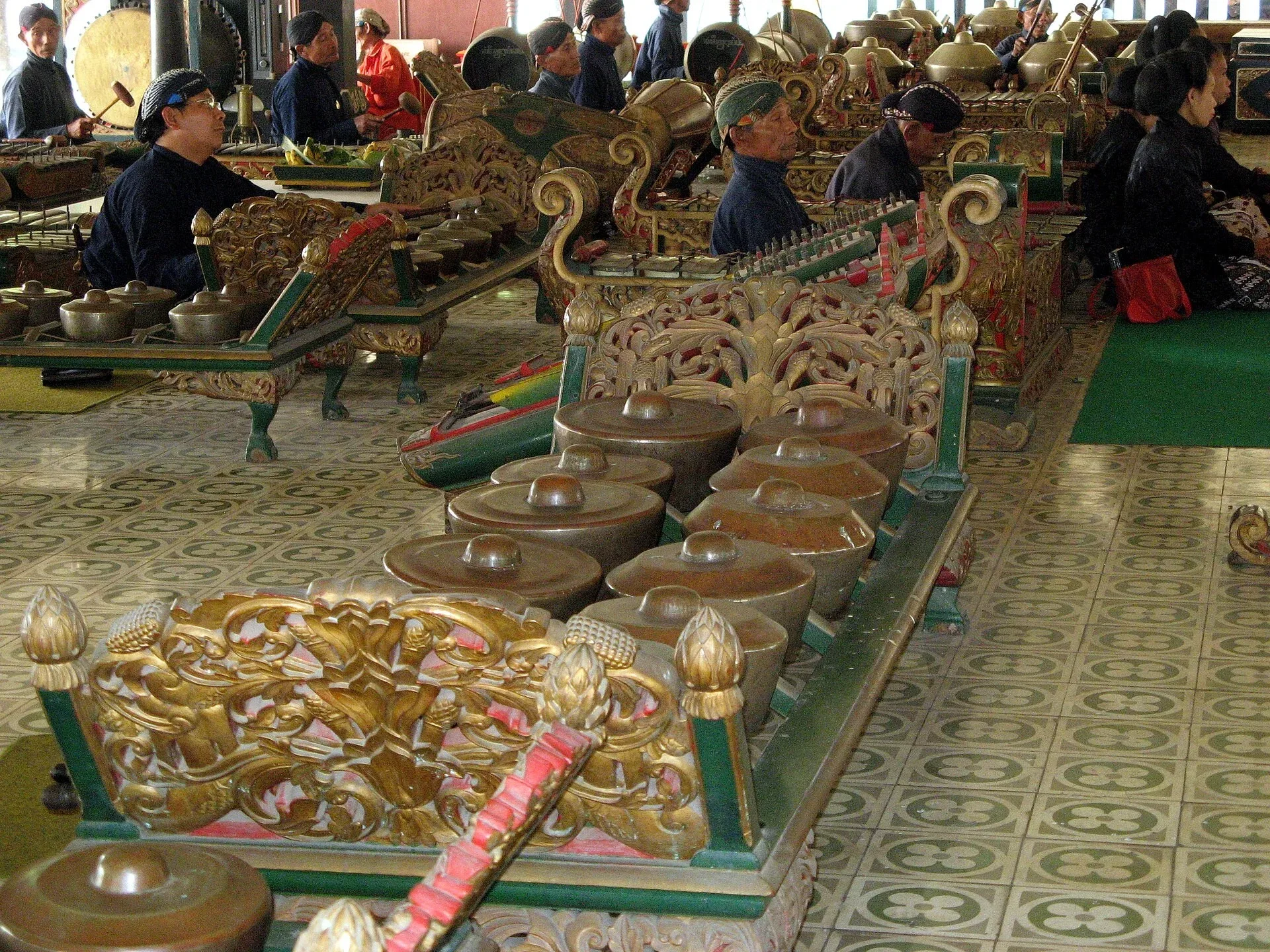
UNESCO inscribed gamelan, the traditional Indonesian percussion orchestra, in 2021, and says it is typically performed in religious rituals, ceremonies, traditional theatre, festivals and concerts. Its listing does not mention weddings, though it is often told that families book live gamelan for the panggih and reception.
At palace weddings, the court dances Beksan Bedhaya Manten, with two dancers playing the bride and groom, and the soldiers' dance Beksan Lawung Ageng at the reception. It is often told that pieces such as Kebo Giro accompany the bride's entrance; name any piece that matters when you book the musicians.
Many Javanese-Australian couples hold some of these rites at home, and they travel well when the people who lead them are present.
Ask both families first which steps they want, then ask who should lead them. A juru paes, or family elders who know the rites, should guide the siraman, panggih and sungkeman rather than a celebrant reading from notes. A panggih needs room for parents to walk the couple forward and a clear sightline for guests.
A printed order of events helps guests who are new to the customs.
This reflects official guidance as at November 2026 and is not legal advice.
The Australian Embassy says neither DFAT nor its missions can advise on another country's marriage requirements; contact the Indonesian Embassy or the Civil Registry Office where you will marry, and consider a lawyer in Australia or Indonesia. Persons of any nationality may generally marry in Indonesia if they hold a religion the Indonesian Government recognises, and the marriage must follow that religion. Under Indonesian Law No. 1 of 1974, both partners must hold the same religion, or one must convert.
Share a recognised religion. Both partners hold the same recognised religion, or one converts.
Apply for a Certificate of No Impediment to Marriage (CNI) from the right post: Yogyakarta, the Embassy in Jakarta; Solo and East and Central Java, the Consulate-General in Surabaya; Bali, the Consulate-General in Bali.
Watch the date. Civil Registry Offices do not normally accept a CNI issued more than 3 months before.
Marry and register. Muslim weddings are performed by the KUA, which issues the marriage book. Other faiths lodge a Notice of Intention to Marry with the Civil Registry Office at least 10 days before, then register there afterwards.
Our tip: lodge the notice while the CNI is under 3 months old.
Since 1 January 1995, a marriage legally performed overseas that would have been legal in Australia is generally recognised under Australian law, but you cannot register an overseas marriage in Australia. Some couples ask whether to marry legally at home and hold the Javanese rites abroad; raise it with the embassy, and read our piece on a legal or symbolic ceremony abroad.
Smartraveller advises a high degree of caution in Indonesia overall (level 2) and to reconsider travel to Papua Pegunungan and Papua Tengah (level 3); no Java province or Bali is listed at a higher level. Its volcano list includes Mount Merapi, between Central Java and Yogyakarta, and Mount Semeru in East Java. Keep a weather and transfer Plan B for outdoor rites, and give older guests Smartraveller's local emergency numbers: ambulance 118, medical emergencies 119. Smartraveller also notes that the revised criminal code includes penalties for cohabitation and sex outside marriage; for unmarried people, authorities can act on a complaint from a child or parent. Read Smartraveller's local laws section before you book rooms.
Check every step, including any fees, with the Australian Embassy in Indonesia and the registry. For the Bali side, see our guide to weddings in Bali, and for the wider Indonesian picture, our Indonesian wedding traditions overview.
The rites belong to your families. A Wedded Advisor plans the venue, travel and vendors around them as one point of contact; the fee is agreed in writing before work begins, and inclusions are confirmed in writing before you commit. Weighing Java, Bali or home? Start with Wedded Concierge.
Written by

SEO Specialist
Ayrton Christian Braga is an SEO Specialist at Wedded Wonderland, where he writes optimized articles and web pages that center on destination weddings, cultural wedding traditions, and guides for everything in between.
Search real weddings, venues and vendors from around the world.
Search Wedded Wonderland