If one of you has a Filipino parent or grandparent, the questions tend to arrive early. This Wedded Wonderland guide explains the sponsors, the coins, the veil and the cord, and what Australians need to know about Filipino wedding traditions. Customs vary by family, so treat it as a starting point. For other cultures, see our guide to wedding traditions worth keeping.
Most Filipino wedding customs fall into three moments: the families meeting before the day, the rites inside the ceremony, and the celebration afterwards. The table below is a starting point, not a script.
Custom | When it happens | Who usually takes part |
|---|---|---|
Pamamanhikan | Before the wedding, once a couple decide to marry | The groom and his parents, the bride's parents |
Despedida de soltera | In the weeks before the wedding | The bride, her family and friends |
Superstitions | Throughout the planning | Older relatives, mostly |
Principal sponsors | The ceremony and the years after | Ninong and ninang chosen by the couple |
Arras (13 coins) | The ceremony | The couple, sometimes with a sponsor |
Candle lighting | The ceremony | Candle sponsors |
The veil | The ceremony | Veil sponsors |
The cord | The ceremony | Cord sponsors |
Rice or petal shower | As the couple leave the ceremony | Guests |
Money dance | The reception | The couple and guests |
Barong tagalog and Filipiniana | All day | The couple, families, often guests |
One thing to hold on to from the start: these customs vary by family, faith and region. A Catholic family in Manila, a Protestant family in the Visayas and a Muslim family from the south may each describe a "traditional" Filipino wedding quite differently.
The customs before the day are about families more than the couple. Filipino marriage is often described as a union of two families, not only two people.
The pamamanhikan is often described as the formal visit in which the groom and his parents call on the bride's parents to ask for her hand and their blessing. It is also, in many families, the first time the two sets of parents are formally introduced.
The wedding date is often settled at this meeting, after which the couple are considered officially engaged. The custom is said to go by other names in other regions: tampa or danon among Ilocanos, pasaguli in Palawan and kapamalai among Maranao families, and a Cebuano visit can include musicians as well as gifts.
Serenading in courtship, the harana, is often described as a sung exchange between a suitor and the woman he courts, and as no longer common today. Treat it as family history rather than something to stage.
For a destination wedding, a practical note: hold the pamamanhikan, or a version of it over dinner, before you lock the date. Both families feel consulted, and it gives the older generation a clear role from the start.
The despedida de soltera is often told as a farewell gathering for the bride before the wedding. The format varies from family to family. Ask the family hosting it what they have in mind rather than assuming a particular shape.
Many families have a few. Among those often told: siblings should not marry in the same year (known as sukob), the bride should not try on her gown before the day, and knives or other sharp objects make poor wedding gifts.
None of these have a single agreed source, and families keep them to very different degrees. If a grandparent raises one, it is usually easier to listen and adjust a small detail than to argue the point.
For guests from outside the culture, sponsors can be the least familiar part of a Filipino wedding. They are honoured guests with a role, and couples often choose them with as much care as the wedding party.
Principal sponsors, called ninong (godfather) and ninang (godmother), are often described as honoured guests, often married couples, whom the couple ask to stand with them and to offer guidance in the marriage that follows.
The law itself speaks of witnesses, not sponsors. Under the Family Code of the Philippines, the couple declare they take each other as husband and wife in the presence of at least two witnesses of legal age. The marriage certificate is signed by the couple and their witnesses and attested by the solemnising officer. Some couples ask principal sponsors to be those witnesses, but confirm with your officiant who signs.
Secondary sponsors are often pairs, each with one task in the ceremony: lighting the candles, placing the veil or placing the cord. Families differ on who else has a role, so ask both sides early.
Choosing secondary sponsors is a quiet way to honour siblings, cousins or close friends who are not in the bridal party. Brief them on timing at the rehearsal so each pair knows their cue.
If you are marrying away from the Philippines, ask your celebrant whether they have run the veil, cord and arras rites before, and in what order. Ask the venue whether a rehearsal slot is available for sponsors arriving from overseas. Then ask who will keep the veil, cord and arras safe before the ceremony.
The rites below are often part of Filipino Catholic weddings, and some couples keep them in civil or celebrant-led ceremonies too. Philippine law requires no prescribed form or religious rite for a marriage, so a couple can keep any of these as cultural moments wherever they marry. If you marry in a church or chapel, check with the parish or venue what is permitted.
The arras is often described as a set of 13 coins that passes between the couple during the ceremony. Who hands them to whom differs between parishes and families, so ask your officiant how they run it. The coins are often told to stand for provision and a shared household.

Candle sponsors often light candles on either side of the couple during the ceremony. Families explain the meaning in different ways, so ask yours what it holds for them.

Veil sponsors often drape a veil over the bride's head and the groom's shoulders. It is often told that the veil shows the couple being clothed as one.

Cord sponsors often then place a cord, sometimes called a yugal, over the couple's shoulders, often in a loose figure eight. It is often told to stand for the lasting bond of marriage. Ask the family whether there is a cord they would like you to use.

Filipino receptions are often long, generous and full of family. One custom marks the moment you leave the ceremony, and another runs through the reception itself.
As the couple leave the ceremony, guests often shower them with rice or petals. It is often told as a wish for abundance. Check with the church or venue what guests may throw before you hand anything out.
The money dance is often the reception custom guests talk about. During a dance, guests often pin notes to the couple's clothes as cash gifts. There is no set amount, and no guest should feel obliged to join.
If guests from outside the culture are coming, a line on the wedding website explaining the dance spares everyone a moment of confusion. Some couples hold a basket or envelope nearby for guests who would rather not pin.
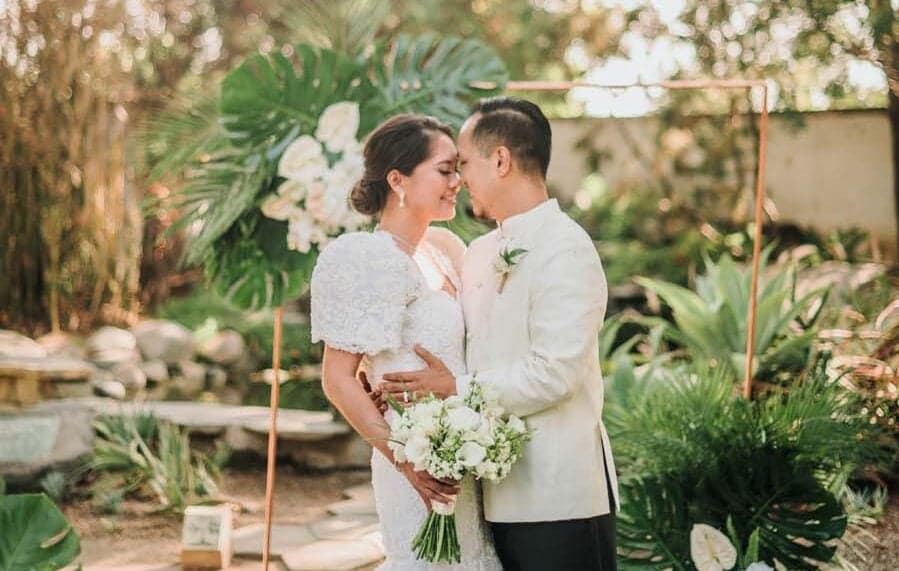
Attire is one custom couples can keep anywhere, even far from the Philippines. The groom and male relatives often wear a barong tagalog, an embroidered shirt. Brides and female relatives often choose Filipiniana, a broad name for traditional Filipino dress, which many families associate with butterfly sleeves.
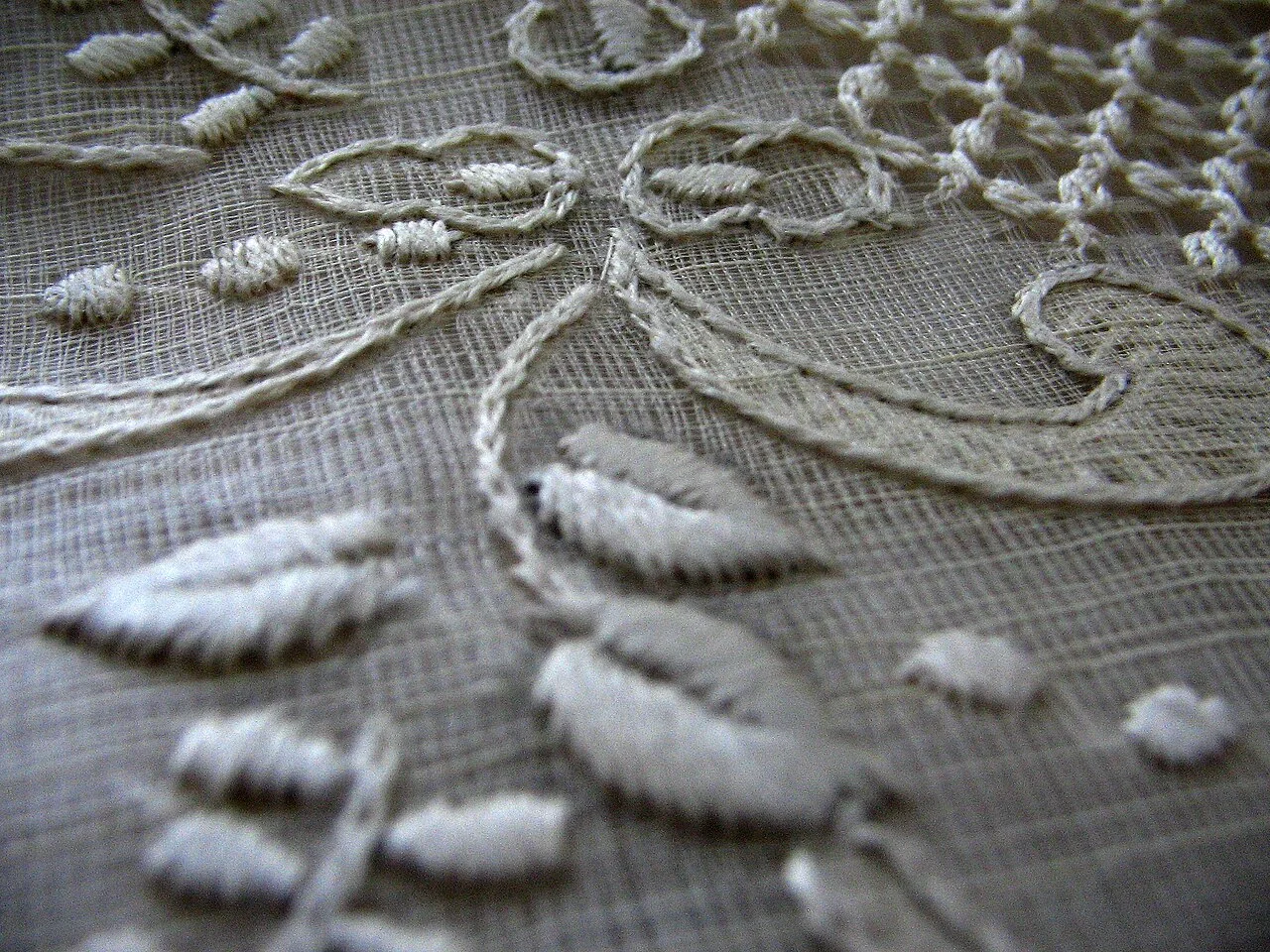
Couples who prefer a Western gown often bring in Filipiniana another way: embroidery on the veil, a sleeve detail, or a change of outfit for the reception.
For a sense of how this looks away from the Philippines, see a Filipino couple's autumn wedding in Tuscany.
Not every Filipino wedding is Catholic, and not every custom in this guide belongs to every family. Christian families of different churches, Muslim Filipino families and Indigenous communities each have their own practices, and regional versions of the same custom go by different names.
Among Filipino Muslims, for example, marriages arranged between both families are described as common, and a Tausug wedding is described as being officiated by an imam with readings from the Quran. These are examples, not a rule for any one community.
The most useful step is also the simplest: ask each side of the family which customs they keep and what they mean to them. You will often find that two families describe the same rite differently, and that both versions can sit in one ceremony. If you are weighing where to hold it, our guide to destination weddings in Asia is a good place to start.
Marrying in the Philippines is possible for Australians, and the paperwork is best started early. What follows is general information from official sources as at November 2026, not legal advice.
Start with what the law requires. Philippine law needs a ceremony before a solemnising officer, with at least two witnesses of legal age, and no prescribed form or religious rite.
Smartraveller says some countries ask you to prove you are not already married, and the most common documents are a Certificate of No Impediment to Marriage (CNI) and certificates from a registry of births, deaths and marriages. DFAT can issue a CNI in Australia, but some local authorities only accept one issued in their own country. Ask whether you need one, where to get it, and whether it needs an authentication or apostille.
Local authorities may also ask for divorce papers, the death certificate of a deceased spouse, and your original birth certificate and passport. Australian registries can issue a no-record statement or a Single Status certificate, so order these early.
For the marriage licence, any waiting period and the exact documents, check with the local civil registrar where you will marry and the Australian Embassy in Manila, including any fees.
Not published: a single official checklist of documents and timelines for Australians marrying in the Philippines. Your Wedded Advisor can talk you through the current requirements, and confirms the fee and inclusions in writing before you commit.
You cannot register an overseas marriage in Australia, but Smartraveller says it is in most cases legally recognised if it was valid where it took place and would have been valid under Australian law. A foreign marriage certificate is usually accepted as proof of marriage, but may not work as proof of a name change, so check with your state registry before changing passports or bank details.
Australia does not recognise an overseas marriage where either person is already married, not old enough, too closely related or forced to marry. To confirm your marriage is valid, Smartraveller suggests talking to a lawyer. Our guide to registering an overseas marriage at home explains more, and our destination wedding checklist helps you time each step.
If the paperwork is where your planning has stalled, you can speak with a Wedded Advisor. Your Wedded Advisor is your single point of contact, works in your time zone, and plans venue, travel, vendors and payments with you, anywhere in the world.
As at November 2026, Smartraveller's advice for the Philippines is Level 2, "Exercise a high degree of caution", overall, due to the threat of terrorism and violent crime. The page was updated on 24 September 2026 and was still current on 2 November 2026.
Higher levels apply in some areas. Smartraveller says "Do not travel" (Level 4) to central and western Mindanao, including the Zamboanga Peninsula, the Sulu Archipelago and the southern Sulu Sea area. It says "Reconsider your need to travel" (Level 3) to eastern Mindanao, excluding Camiguin, Dinagat and Siargao Islands.
Smartraveller also notes that the Philippines recognises dual nationality and that Australians should always travel on an Australian passport. Same-sex couples should know that, according to the same page, local laws do not protect LGBTQIA+ rights.
Shortlist only places outside the higher-level areas, and recheck Smartraveller advice for the Philippines before you pay any deposits, since the page is updated regularly.
If older or less mobile relatives are travelling, ask each venue on your shortlist a few plain questions. Is there step-free access to the ceremony and reception spaces? How far is the airport, and how long is the transfer? Is there seating and shade for older guests? What medical help is nearby?
These are the questions couples and guests ask most often about Filipino weddings. Each answer is short, and customs still vary by family, faith and region.
If one of you has a Filipino parent or grandparent, the conversations along the way are often the part remembered longest. You do not need to keep every custom in this Wedded Wonderland guide, only the few that mean something to your families. Perhaps that is the sponsors, the veil and cord, and a money dance. For more ideas, see our guide to wedding traditions worth keeping or read the free magazine.
Written by

SEO Specialist
Ayrton Christian Braga is an SEO Specialist at Wedded Wonderland, where he writes optimized articles and web pages that center on destination weddings, cultural wedding traditions, and guides for everything in between.
Search real weddings, venues and vendors from around the world.
Search Wedded Wonderland