Most couples inherit their wedding traditions before they choose them. Many come with a romantic origin story, from the "vein of love" to the mead behind "honeymoon", that is more myth than history. At Wedded Wonderland, we trace where each tradition really comes from, using museum, encyclopaedia and church sources. Then we say what to keep, adapt or skip, especially for a wedding overseas.
Here is how we would weigh the traditions in this guide for a destination wedding. Take note that this is our editorial view, not a rule.
Tradition | Our call | Why |
|---|---|---|
Rings | Keep | Short, universal, travels anywhere |
Vows | Keep | Personal vows suit a symbolic ceremony abroad |
Veil | Adapt | Length and style depend on setting and weather |
White dress | Adapt freely | A Victorian fashion, not an ancient rule |
Something old, new, borrowed, blue | Keep | Personal and packs in a carry-on |
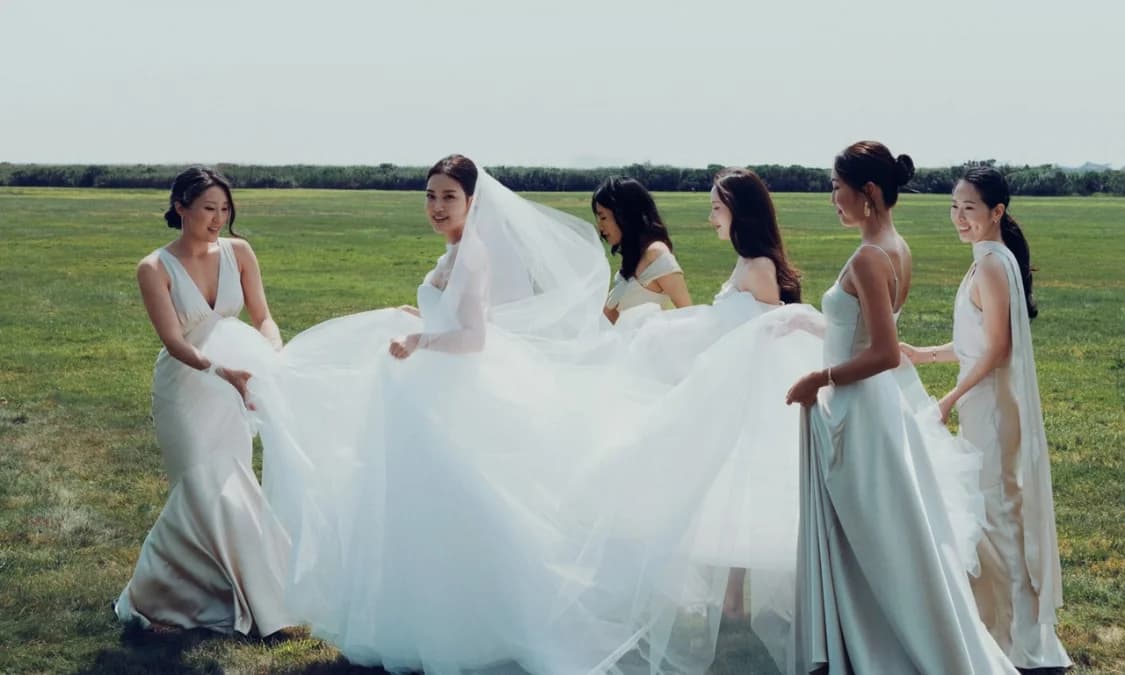
Wedding party | Adapt | Smaller and mixed parties ease guests' travel |
Giving away | Adapt | Optional even in the Church of England |
Not seeing each other first | Your choice | A first look helps with light and timing |
Handfasting | Keep as a symbol | Fits a symbolic ceremony well |
Jumping the broom | Keep where it is your heritage | A ritual with a history to honour |
Breaking the glass | Keep where it is your faith | Agree the logistics with the venue |
Confetti or rice | Adapt | Petals, and check venue rules first |
Cake | Adapt | Local sweets and boxed slices travel better |
Toasts | Keep, shorter | Spread speeches across the weekend |
Bouquet toss | Adapt or skip | Give the bouquet to someone instead |
Honeymoon | Keep | Often starts from the same trip |
Threshold | Optional | A light moment at the suite door |
Wedding traditions are the customs couples repeat because earlier couples did. Some are religious rites, some legal formalities, and many began as fashion.
A custom gains a romantic backstory, the backstory is repeated online, and soon it reads like history. Where the record is clear, we link the source. Where a story is widely told but undocumented, we say so. If your celebrant will explain a ritual to 80 guests, the explanation should be true.
Rings and vows are the two moments almost every ceremony keeps, whatever the faith or country. Here is where each one really comes from, and how it holds up at a wedding overseas.
The giving of a ring at betrothal may go back to ancient Egypt, but Britannica notes that the earliest concrete evidence of engagement rings is Roman. Romans treated the ring as a sign of a legal agreement to marry; a woman traditionally received an iron ring, and women from wealthier families also received a gold one to wear in public. In the 12th century the Roman Catholic Church made marriage a sacrament and brought the placing of a ring on the bride's finger into the ceremony.
The English-speaking custom of the fourth finger of the left hand is written into the Book of Common Prayer marriage service of 1662, where the ring is placed "upon the fourth finger of the Woman's left hand" with the words "With this ring I thee wed". In that service only one ring is given, described as "a token and pledge" of the vow.
The myth: The ring finger was chosen because a "vena amoris", or vein of love, runs straight from it to the heart. Britannica records that a few sources suggest ancient cultures believed this, and that modern medicine has shown there is no such vein.
Not every country follows the left-hand rule. In Chile and Brazil, for example, each partner wears a ring on the right hand during the engagement and moves it to the left hand at the wedding. If that is your family, plan a moment in the service for the switch.
Our view: Keep this tradition. The exchange is short, universal and travels anywhere. If your celebrant loves the vein of love line, have them tell it as a story, not anatomy.

The familiar English vow wording also comes from the Book of Common Prayer: "to have and to hold from this day forward, for better for worse, for richer for poorer, in sickness and in health, to love and to cherish, till death us do part". In the 1662 text the bride's vow adds "to obey" and the groom's does not.
If you want the wording in full, our guide to traditional wedding vows, word for word sets out the main versions. If you would rather say something of your own, start with our notes on writing your own vows.
An overseas marriage cannot be registered in Australia, but according to Smartraveller it is legally recognised in most cases if it was valid where it took place and would've been valid under Australian law. To confirm validity, it is still best to speak to a lawyer.
Our view: Keep this, and in your own words if you like. The vow is the one moment guests have travelled for.
Attire is where some of the most confident wedding stories live, from the veil to the white dress. This section separates what the record supports from what is only repeated, and what suits a destination wedding.
You will often read that the veil hid the bride from evil spirits, or from a groom who had not yet seen her face. We could not find either story documented in a reputable source, so we would not repeat them as history. Queen Victoria, for what it is worth, wore a wreath of orange blossoms with her gown in 1840.
Our view: Adapt it in your own way. A cathedral-length veil suits a church; a short veil copes better with sea breeze and summer heat. Flowers, or nothing at all, are equally at home.

For centuries in Western societies, wedding dresses came in every colour. Brides tended to buy a dress they could wear again, or wore the best dress they already owned, and white was impractical to keep clean.
That changed with Queen Victoria, who married Prince Albert on 10 February 1840 in a dress attributed to the court dressmaker Mary Bettans. The Royal Collection Trust says the dress established a form of bridal fashion that persists today, "formalising as it did the wearing of white wedding dresses".
She did not invent white, and Britannica suggests she chose it partly to show off Honiton lace from the struggling British lace industry. The trend was taken up first by wealthier brides, spread across all economic levels, and was cemented as "tradition" in the 20th century.
Our view: Adapt it freely. The white dress is a 186-year-old fashion that became tradition. If you would rather wear colour, or change outfits across a three-day celebration, history is on your side.
Four small things carried on the day and, in the longer version, a sixpence in the shoe. It is an English-language rhyme, and you will see confident dates for when it, and the sixpence line, first appeared, along with neat meanings for each item.
Our view: Keep this. It costs nothing and travels in a carry-on. Make "something borrowed" a family heirloom: a grandmother's brooch, a father's cufflinks, a handkerchief that has been to three generations of weddings. Partners of any gender can carry them.

These traditions shape who stands beside you and how the ceremony begins. Each has a practical root, and each can be adapted for a smaller or mixed group travelling abroad.
The idea of people standing with you has a plain practical root: a marriage needs witnesses. In the 1662 service the couple are pronounced married because they have "witnessed the same before God and this company". The Church of England's current service tells the congregation "You are witnesses of the marriage" and asks family and friends whether they will support the couple, to which they answer "We will".
Our view: Adapt it. Mixed parties, a "person of honour" or no formal party are all normal now. At a destination wedding every attendant is also paying to travel, so smaller is often kinder. And since the guests are the witnesses, a close guest list is no less traditional than a large one.
In the 1662 Book of Common Prayer the minister asks "Who giveth this woman to be married to this man?" and receives the bride "at her father's or friend's hands".
The Church of England's current Common Worship service describes the giving away as "This traditional ceremony is optional". It allows the father, mother or another family member or friend to present the bride. It also offers an alternative in which the parents of both partners are asked whether they entrust their children to one another, and both sets answer "We will".
Our view: Adapt it. Both parents, a grandparent, walking in together or alone: all have precedent. The "both families answer" version suits blended families and couples of any gender.
Not seeing each other before the ceremony is a superstition with no documented origin we could find.
Our view: Optional. Many couples now plan a private "first look". Abroad it often makes sense: you take portraits in the best light and spend cocktail hour with guests who have flown a long way.
Handfasting, jumping the broom and breaking the glass are symbolic rituals that carry real cultural and religious weight. Here is what the sources say about each, and what to arrange with your venue first when marrying abroad.
You will often read that a handfasting was a trial marriage for "a year and a day". It is often told but not documented, so we would leave it out of your ceremony script.
What most couples mean by handfasting today is a modern symbolic ritual: the celebrant loosely binds the couple's hands with a cord or ribbon while they speak, and "tying the knot" becomes literal for a moment.
Our view: Keep this, as a symbol. It is a natural fit for a symbolic ceremony abroad after a legal marriage at home. Ask a family member to bring the cord.

Jumping the broom holds a particular place in African American history. Marriages between enslaved people in the antebellum United States had no legal standing; enslaved people were treated in law as property, and spouses could be separated by sale. Their communities nonetheless recognised these unions as moral and spiritual marriages. Some Black preachers marrying enslaved couples replaced "till death do us part" with phrases such as "till distance do you part".
Some first-hand evidence of this has survived. Tempie Herndon Durham, born enslaved, told a Federal Writers' Project interviewer in 1937 that she and her husband Exeter "jumped over the broomstick" at their wedding; those interviews are held by the Library of Congress.
On its origin: it is often said that the custom came from Africa. In an essay for the National Trust for Historic Preservation, Professor Angelita D. Reyes reports finding no broom-jumping marriage ritual in pre-colonial African societies, and points instead to "besom weddings", informal non-church weddings known in Welsh, Celtic and Romani communities of the British Isles in the 18th and 19th centuries. The historian Tyler D. Parry traces the broomstick wedding from those British communities through enslaved communities in the United States, from the 1700s to today.
Today couples of many backgrounds, including multicultural, same-sex and interracial couples, jump the broom to honour the enslaved African Americans who did so.
Our view: Keep it, where it belongs to you. If it is your family's heritage, ask your officiant to explain it briefly, as guests abroad may not know its history. It is a ritual with a painful past, not a novelty.
The passage usually cited as the earliest source for breaking a glass at a Jewish wedding is in the Talmud, Berakhot 30b to 31a. It records that Mar, son of Ravina, saw the Sages at his son's wedding feast becoming excessively joyful and broke a valuable cup before them, and that Rav Ashi did the same with a cup of very valuable white glass. The stated purpose there is to temper excessive joy.
Later interpretations vary; your rabbi may have their own. Our guide to Jewish wedding traditions covers the ceremony around it.
Our view: Keep it, where it is part of your faith or heritage. At a venue abroad, agree in advance who supplies the glass and its cloth or bag, who clears up, and whether breaking glass is allowed on a terrace or lawn. House rules like these are rarely published, so get them confirmed by the venue in writing.
Once the ceremony ends, a handful of customs shape the celebration, from what guests throw to how the cake is cut. Here is where each one began, and how to adapt it for a venue overseas.
The word confetti comes from the Italian confetto, a sweetmeat. According to the Online Etymology Dictionary, English used it from 1815 for small lime or plaster pellets thrown at Italian carnivals in place of the sugared sweets traditionally thrown there. The custom was adopted in England by the early 19th century for weddings and other occasions, and bits of paper were being called confetti by 1846.
Rice is often explained as a wish for fertility, but we could not find that documented in a reputable source.
Our view: Adapt it. Dried petals or flowers from the venue garden look better in photographs and are easier to clear. Venue rules on paper confetti, rice and petals vary and are rarely published, so get what is allowed in writing before you order anything.

Cake and marriage have an old connection. Roman confarreatio, the most solemn form of Roman marriage and usually reserved for patrician families, took its name from a cake of spelt.
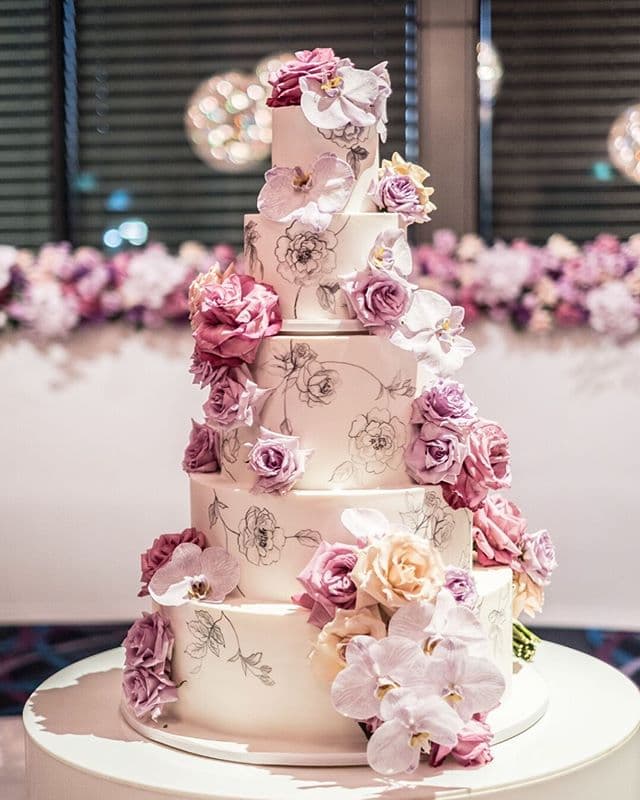
The grand white wedding cake owes much to Queen Victoria again. One of the cakes made for her wedding in 1840 was circular, weighed 300 pounds and measured about 3 metres around, decorated with figures of the couple in ancient Greek costume. More than one cake was baked because pieces were sent out widely.
Our view: Adapt it. The Victorian cake was made for sharing and sending home, which suits a destination wedding: boxed slices or a local sweet. A tall tiered cake can struggle in summer heat; ask the venue's pastry team what they make best.
Our guide to traditional wedding cake styles has more ideas on this.

Raising a glass to the couple is one of the few traditions almost every wedding keeps. You will sometimes read that toasting began as a way to prove the wine was not poisoned; we found no documented source for that.
Our view: Keep it, but keep it short. At a multi-day wedding, move some speeches to the welcome dinner so the wedding night runs to time.
The Royal Collection Trust traces wedding flowers to ancient Rome, where they were common decoration as symbols of new beginnings, fidelity and fertility. Victorian floriography linked orange blossom with chastity, and Queen Victoria wore a headdress of real orange blossoms at her wedding at the Chapel Royal, St James's Palace. Since the 1850s, every royal bride's bouquet has included a sprig of myrtle from a bush grown at Osborne House from a cutting Prince Albert brought from Coburg.
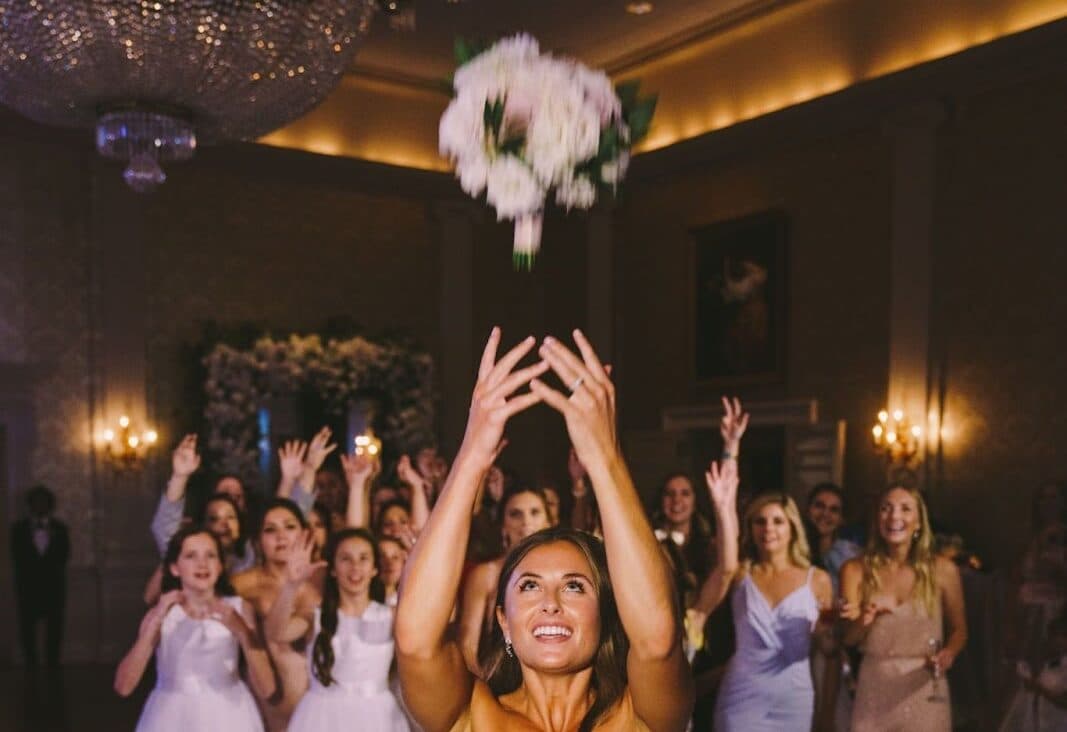
The bouquet toss is another matter. Stories about guests tearing at the bride's dress for luck are often repeated, but we found no reputable source for where the toss began.
Our view: Keep the bouquet, adapt or skip the toss. Borrow the royal habit of meaningful stems: a sprig from a family garden, or a flower from your destination. Many couples now give the bouquet to a grandparent instead. If you're curious about the garter, we have a separate piece on the garter toss tradition.
The myth: "honeymoon" comes from a month of mead given to newlyweds. The dictionary record does not support it.
The Online Etymology Dictionary records "hony moone" in English from the 1540s, meaning the tender first period of a marriage: honey for its sweetness, and moon in the sense of a month, or of the moon waning as soon as it is full. The sense of a holiday after the wedding is recorded from about 1800, and "to honeymoon" as a verb from 1821.
Carrying a partner over the threshold is genuinely ancient, though its meaning was debated even in antiquity. The Greek writer Plutarch asked why Roman brides were lifted over the threshold rather than stepping over it themselves, and offered three possible answers as questions, not facts: a memory of the first Roman brides being carried off by force, a show that she entered unwillingly, or a sign that she might not leave of her own accord.
Our view: Keep the honeymoon, have fun with the threshold. Abroad, the honeymoon often starts the morning after. The threshold becomes the suite door; since even Plutarch was guessing, treat it lightly.
Marrying abroad opens a second set of traditions: the customs of the place itself. Some are easy to share; religious rites belong to the faith behind them.
UNESCO, when it recognised henna rituals as intangible cultural heritage, specifically encouraged states to watch for the "potential risk of decontextualization and over-commercialization". A good test: are you being invited into a custom, or staging it? Ask a local, a family member or your officiant to lead it.
For a wider tour, see our round-up of unusual wedding traditions around the world.
In Italy, confetti means sugared almonds or small round sweets rather than paper, and they often appear in bomboniere, the small thank-you gifts for guests. Our guides to Italian wedding traditions and Italian traditions for your wedding cover the rest; customs vary by region, so ask your planner what is kept where you marry.

Henna is a wedding custom shared across many Arab states. In 2024 UNESCO inscribed "Henna: rituals, aesthetic and social practices" on its Representative List of the Intangible Cultural Heritage of Humanity, nominated jointly by 16 Arab states. UNESCO describes henna as a symbol of joy used at births and weddings, often accompanied by chants, songs, proverbs and poems.
If you're interested in learning more on how it fits the wider celebration, our guide to Arab wedding traditions explains exactly how.
Lebanese celebrations, at home or abroad, are known for the zaffe, a procession of drummers, dancers and singers. Our guide to Lebanese wedding traditions explains it, and the practical point for a destination venue is simple: a moving, loud procession needs a route, room at the door and a clear understanding of the venue's noise rules.
In a Muslim marriage the groom promises a mahr, a commitment to provide his bride with wealth in her lifetime. Our guides to Muslim wedding traditions and the traditions you will see at almost every Muslim wedding explain the nikah and walima. Abroad, a planner looks after timing and space; the content is for the couple, families and officiant.
In saptapadi the couple take seven steps together at the sacred fire. In the form described by The Hindu, the groom recites a blessing for each step and ends: "You and I have walked seven steps together and have become friends". Wording differs between communities, so follow your priest's form.
Open-flame rules are rarely published, so confirm them with the venue in writing first. Our guide to Indian wedding traditions covers mehndi, haldi and the rest of a multi-day celebration.
In the Orthodox marriage service the couple are led in procession, prayed over and blessed, and "crowned with the crowns of God's glory", then receive communion together. The service contains no vows or oaths. It is a sacrament, so a destination ceremony needs an Orthodox priest, not a celebrant's script.
San-san-kudo, "three-three-nine times", is a ritual of traditional, especially Shinto-style, weddings still practised today: the couple take turns sipping sake three times from each of three sakazuki cups, symbolising their union and the joining of families. Japan's Government Public Relations Office explains that it draws on the idea of sharing food and sake with the deities.
The quaich is a shallow, two-handled cup, and many couples share one at Scottish weddings, often with whisky. You may hear that the two handles meant neither drinker could hold a weapon; it is often told, but we found no early source for it. One cup and one short moment: it suits a symbolic ceremony anywhere.
Wondering how to bring a family tradition and a local custom into one ceremony, legally and respectfully? Through Wedded Concierge, one Wedded Advisor plans the venue, travel, vendors and payments with you, start to finish.
A tradition earns its place in your day if it passes at least one of three tests.
It means something to you: If neither of you can say why a ritual is there, it is a candidate to drop.
It means something to your family: A grandmother's veil or a parent's walk can be a gift to the people who raised you, even if you are lukewarm about it.
It works where you are marrying: Fire, glass, confetti, noise, heat and local law all change the answer abroad. Better to know before the order of service is printed.
The best ceremonies rarely keep every tradition, only the few the couple and their families would genuinely miss.
Most couples inherit their wedding traditions before they choose them, but now you know which are history, which are myths, and which are worth keeping. Keep the ones you can explain, your family would miss, and that work where you marry, and make the day entirely yours. For more destination wedding inspiration, read the free Wedded Wonderland magazine.
Written by

SEO Specialist
Ayrton Christian Braga is an SEO Specialist at Wedded Wonderland, where he writes optimized articles and web pages that center on destination weddings, cultural wedding traditions, and guides for everything in between.
Search real weddings, venues and vendors from around the world.
Search Wedded Wonderland