If there is one thing Barcelona Bridal Fashion Week made clear this season, it is that the modern bride is no longer dressing for expectation. She is dressing for herself.
Across runways filled with over a thousand looks, designers presented a version of bridal fashion that feels freer, more expressive, and more in tune with real life. Not stripped back, not overly dramatic, but balanced in a way that allows personality to take the lead.
This is not about abandoning tradition. It is about rewriting it.
Here are the trends that defined the week, renamed the way they actually felt on the runway.
One dress is no longer enough.
Designers like Marco & María leaned into transformable pieces. Overskirts, detachable sleeves, and layered constructions that allow a single look to evolve throughout the day.
The ceremony look. The reception look. The after-party look.
It is not about excess. It is about intention. Dressing for each moment rather than forcing one dress to do everything.
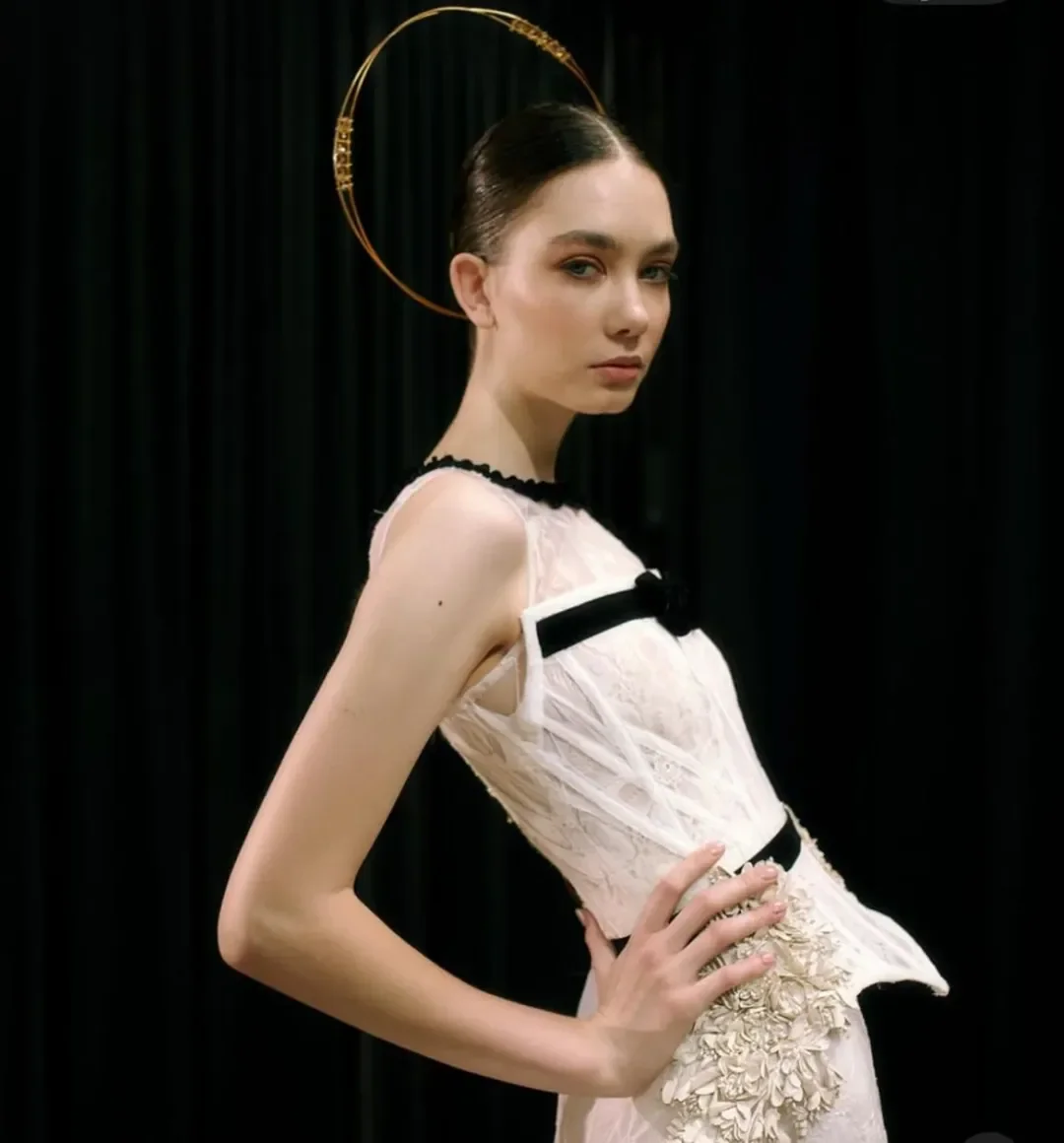
The veil is still here, but it is no longer the only option.
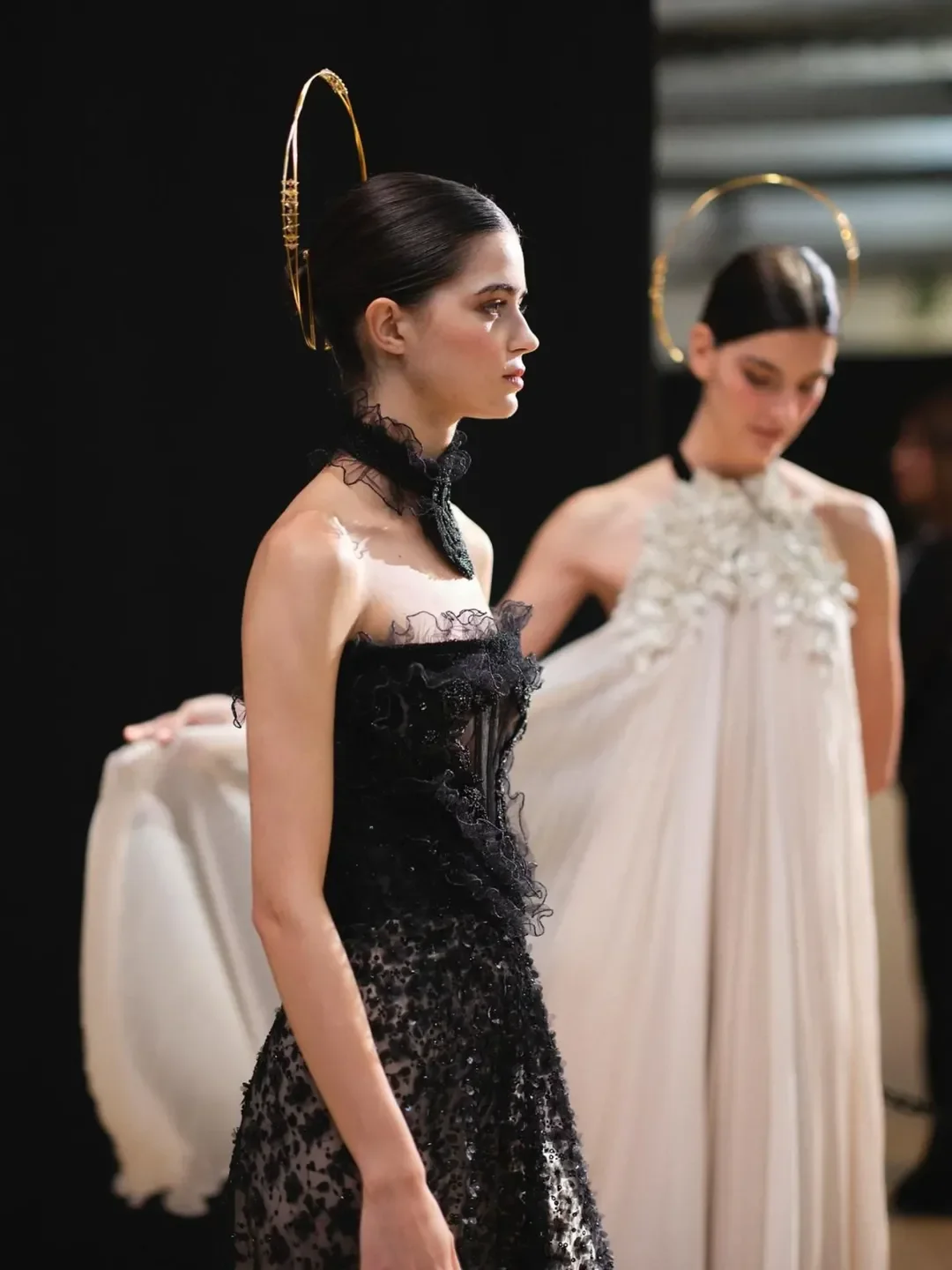
Runways introduced capes, sculptural headpieces, floral mantles, and even hats. Accessories stepped forward as defining elements rather than finishing touches.
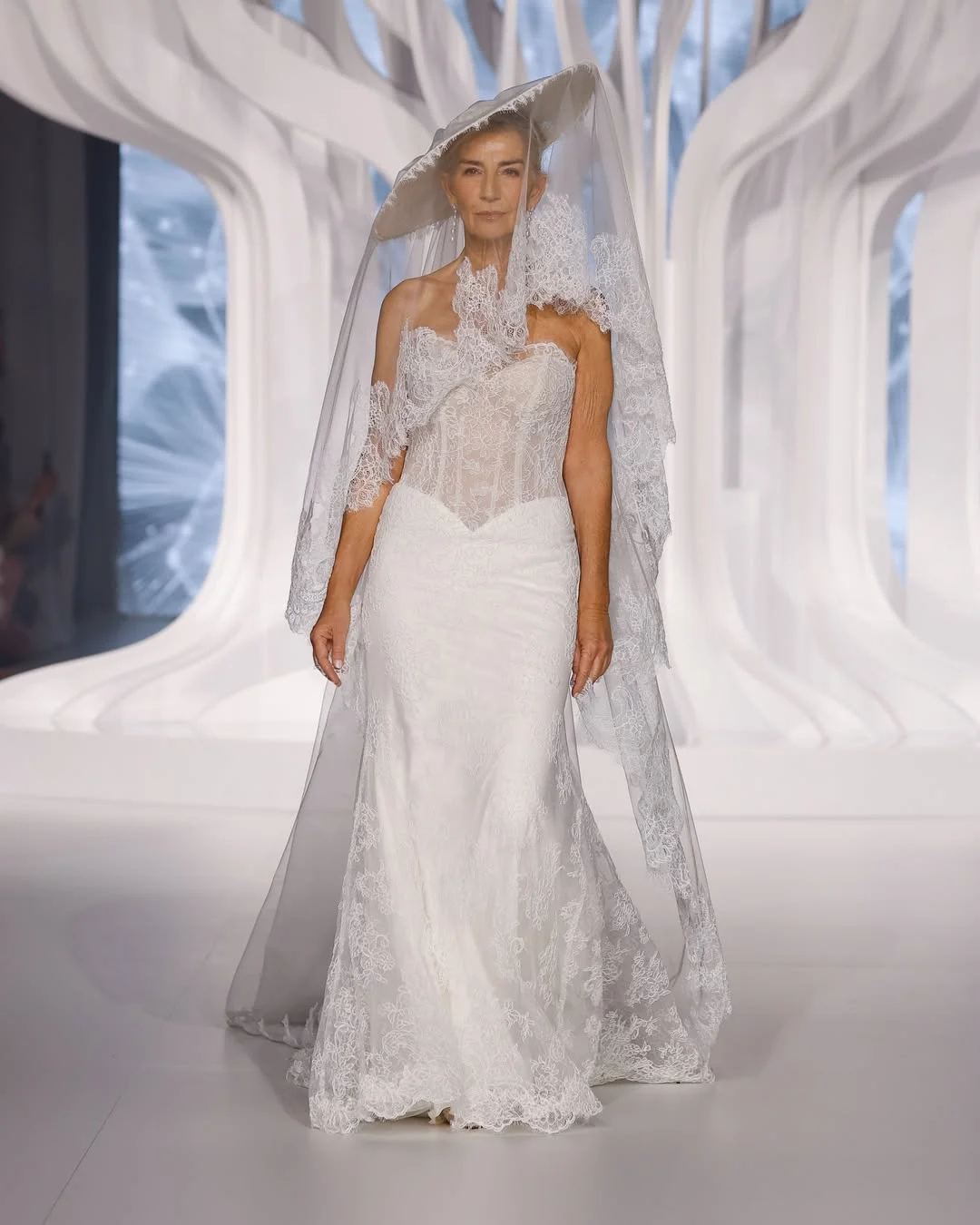
At Marco & María, JoliPoli Couture, and Justin Alexander, jewel-toned headpieces and gold crowns added a sense of drama that felt almost ceremonial.
The message is clear. The bridal look does not end at the dress.
Corsets are back, but they are no longer about restriction. This new wave is lighter, more flexible, and far more wearable.
Yolancris approached corsetry as a styling element rather than a requirement. Think structure without stiffness. Shape without sacrifice.
Instead of forcing the body into a silhouette, these pieces move with it. Some even detach completely, turning the corset into an accessory rather than the foundation.
It is control, but on the bride’s terms.
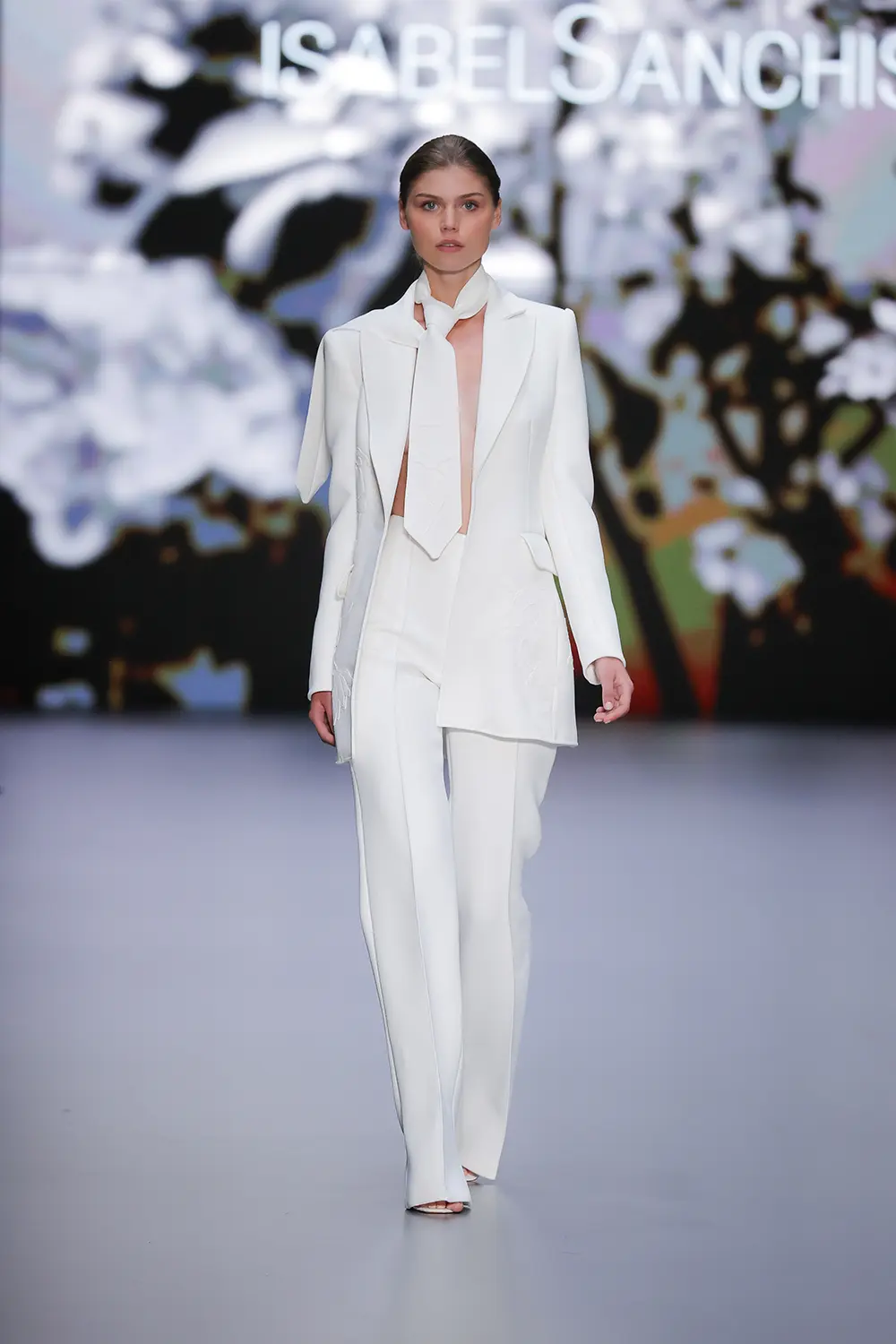
One of the most unexpected moments of the week came in the form of tailoring.
Blazers appeared across collections from Isabel Sanchís to Yolancris, adding a sharp, modern contrast to softer gowns.
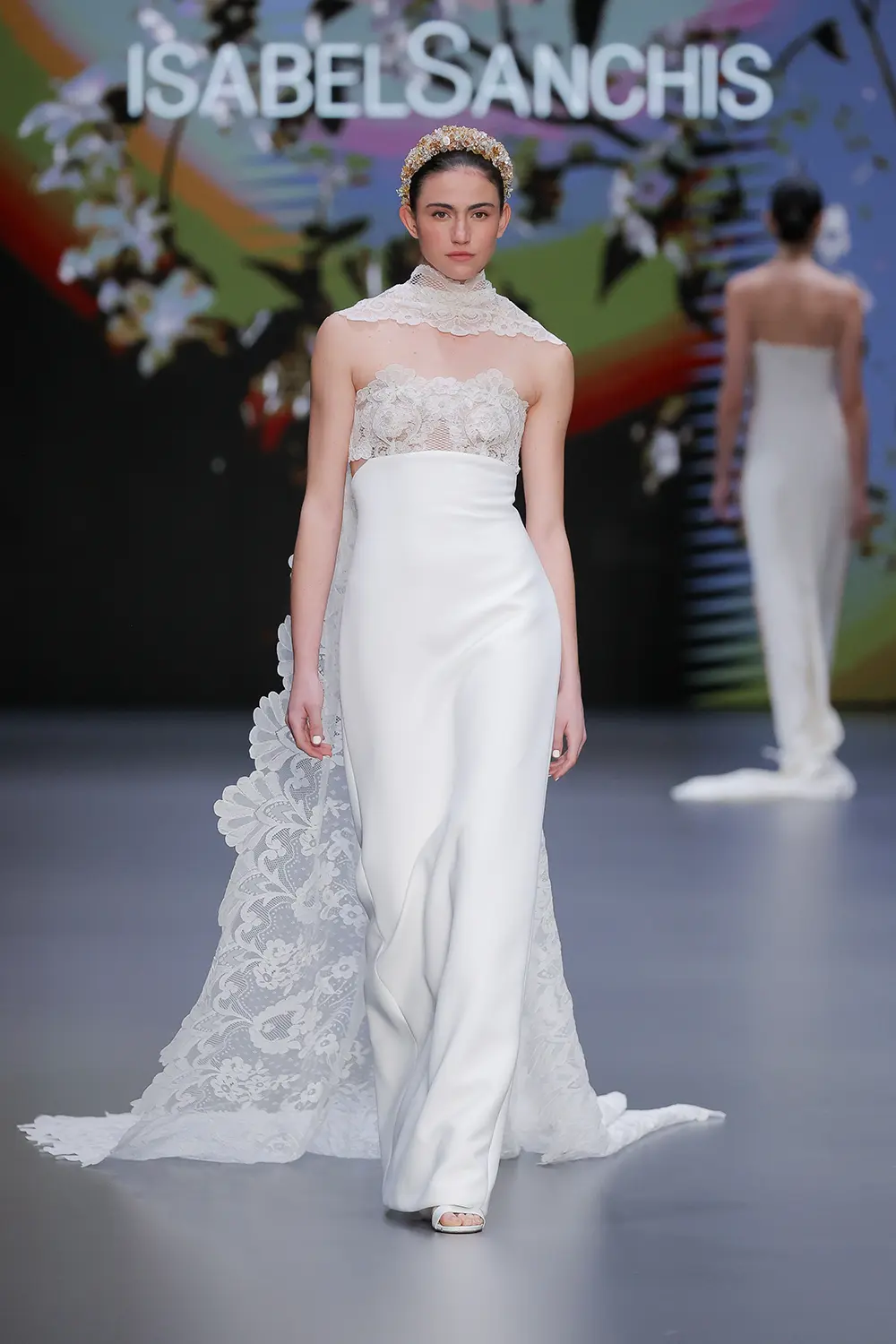
Worn oversized or structured, they bring a certain confidence to the look. Something a little undone, a little effortless.
Perfect for civil ceremonies, second looks, or simply a bride who wants something different.
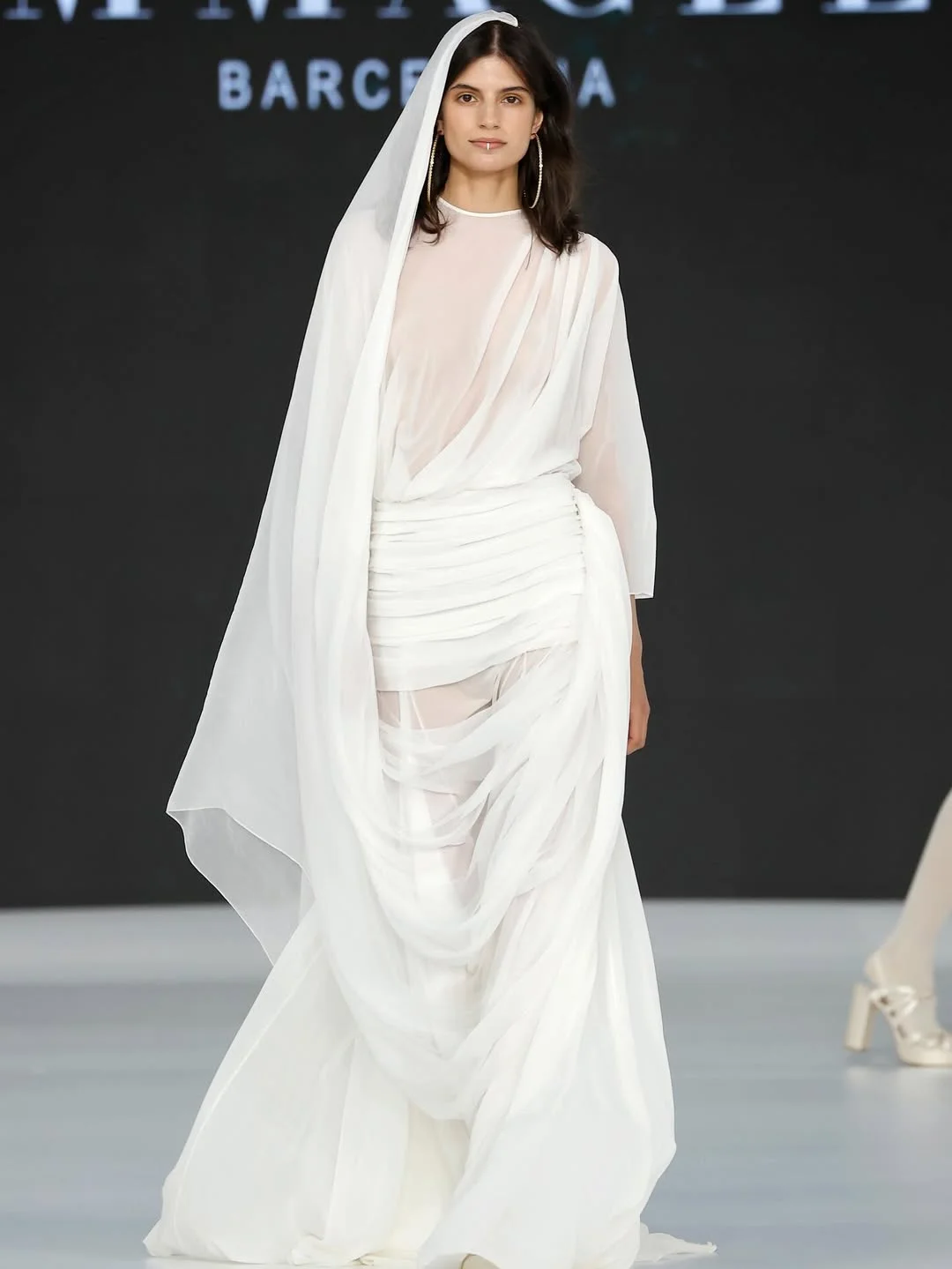
Volume is still here, but it has evolved.
At Imma Clé, flowing silks and chiffon created movement that felt almost cinematic. Elsewhere, designers leaned into drama with fuller shapes that hold space without feeling heavy.
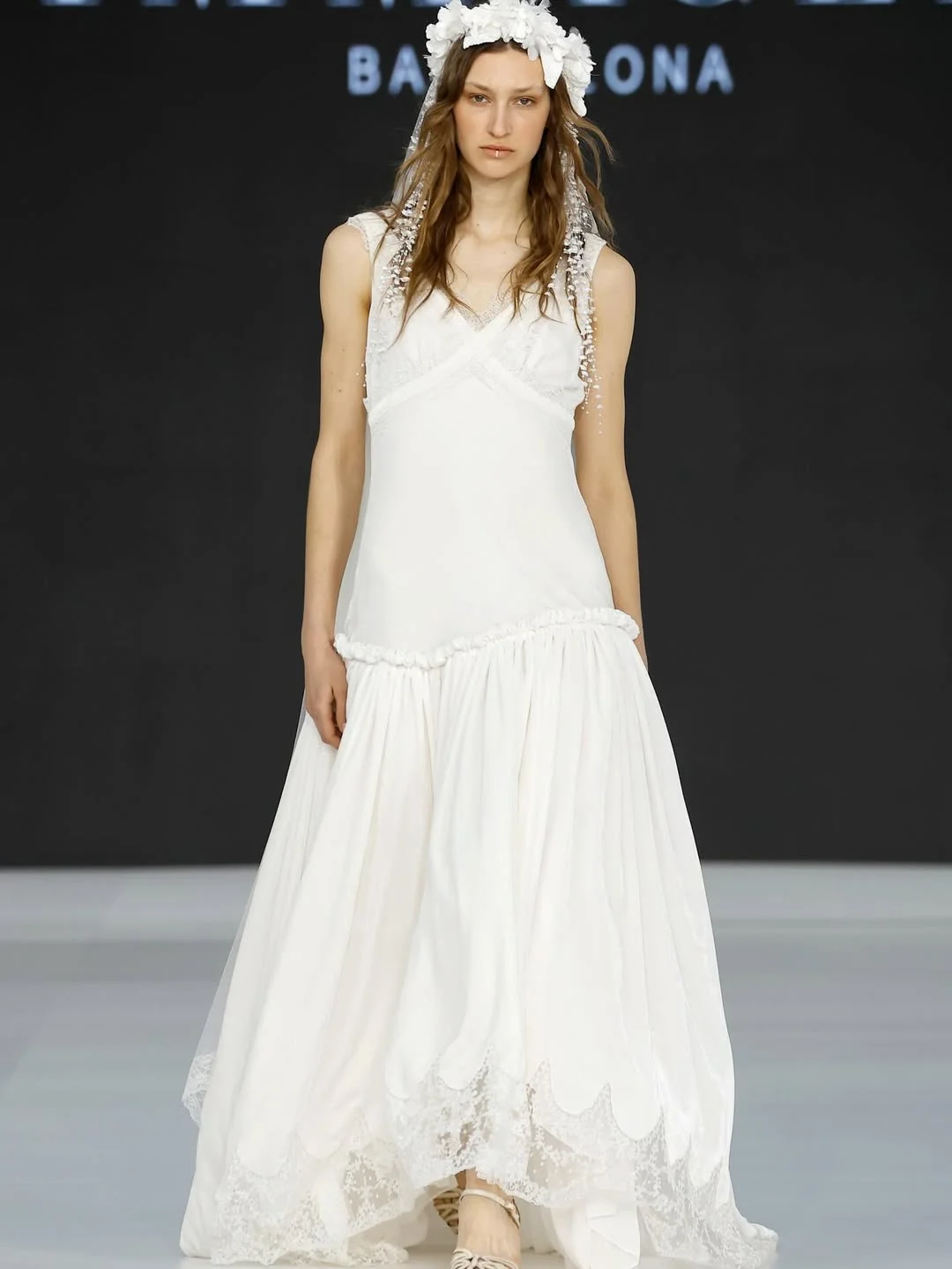
The shift is clear. Brides want to move. To walk, dance, and exist comfortably inside the dress.
Even shorter hemlines made an appearance, subtly revealing shoes and adding a sense of ease to traditionally formal silhouettes.
The dress is no longer just for the aisle. It is for the entire experience.
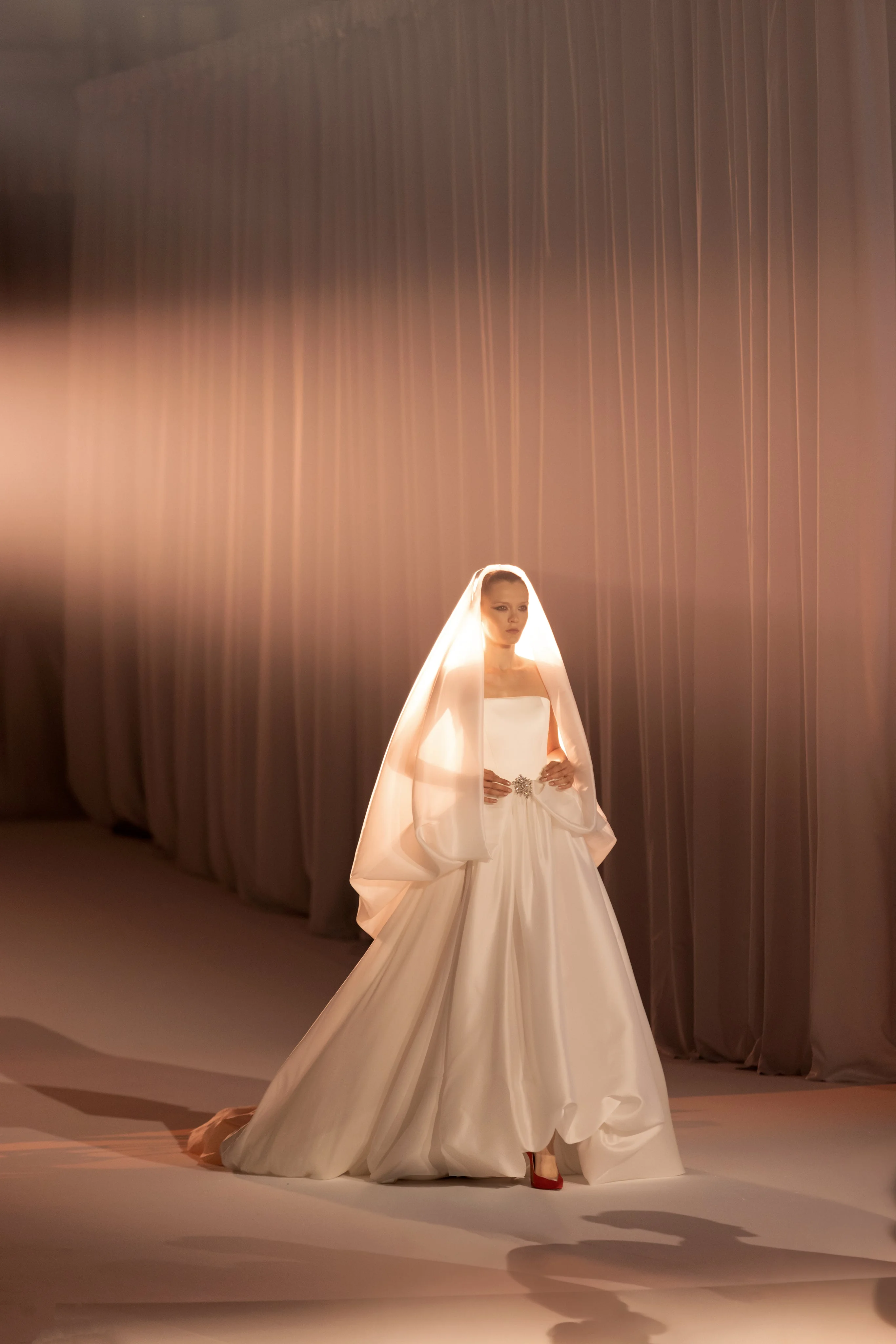
Color quietly took over the runway.
From soft ivories to pale pinks, champagne tones to subtle metallics, designers expanded the bridal palette without losing its softness.
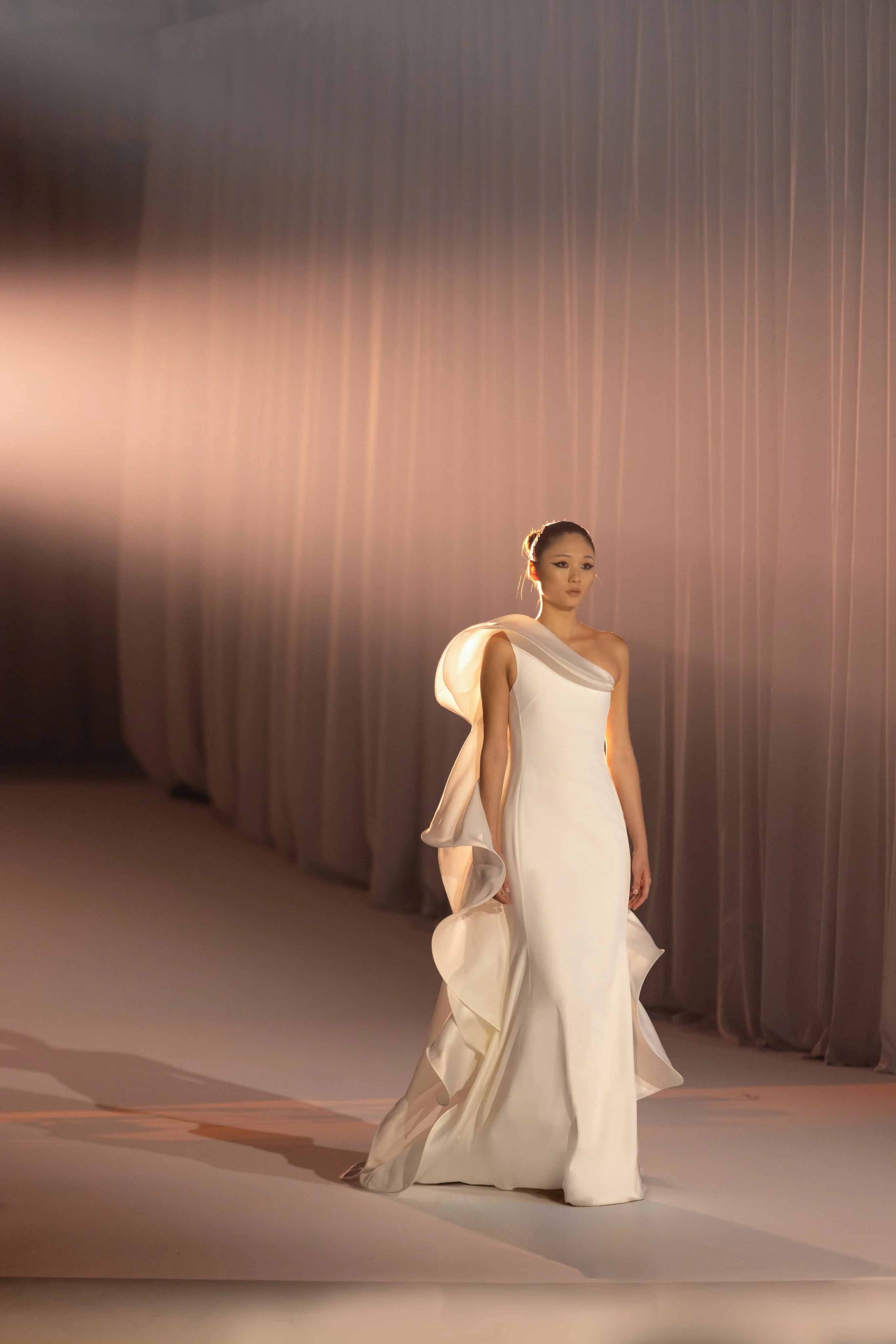
Stéphane Rolland and Diane Legrand leaned into champagne hues, while Marco & María introduced powdery tones with unexpected undertones.
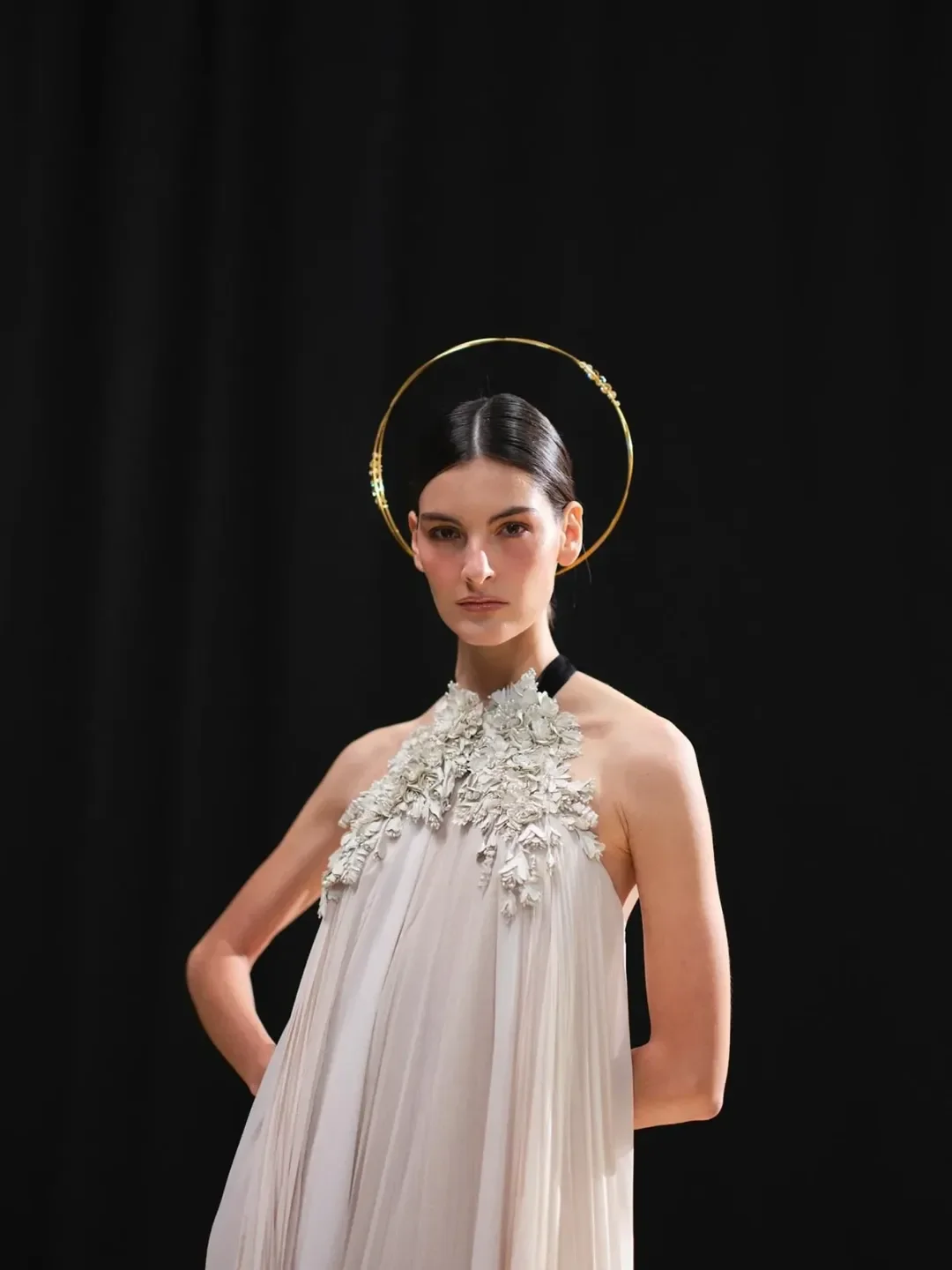
The result feels warmer, more dimensional, and more personal.
White is still an option. It is just no longer the only one.
What Barcelona Bridal Fashion Week ultimately revealed is not just a set of trends, but a shift in mindset.
Bridal fashion is no longer about fitting into a single idea of what a bride should look like. It is about building a look that reflects who she already is.
Structure meets softness. Drama meets ease. Tradition meets individuality.
And somewhere in between, a new kind of bridal identity is taking shape.
For more runway insights, bridal trends, and fashion moments shaping what comes next, follow Wedded Wonderland. For structured planning and early alignment, Wedded Concierge begins with a dedicated strategy session prior to any recommendations.
Search real weddings, venues and vendors from around the world.
Search Wedded Wonderland