Few celebrations are as warm, layered, and joyfully communal as a Turkish wedding. Rooted in centuries of Anatolian custom, a traditional Turkish wedding unfolds over several days, moving from the formal proposal and the emotional Henna Night through to a lively reception filled with gold-gifting, feasting, and dancing.
Here's the journey at a glance:
Before the wedding: the proposal (Söz), engagement (Nişan), and the women's Henna Night (Kına Gecesi)
The send-off: the bridal procession and the maiden's belt
The celebration: the takı gold-pinning ceremony, a generous feast, and communal Halay dancing
Below are the Turkish wedding traditions worth knowing, whether you're planning one, attending one, or simply love a beautiful custom.
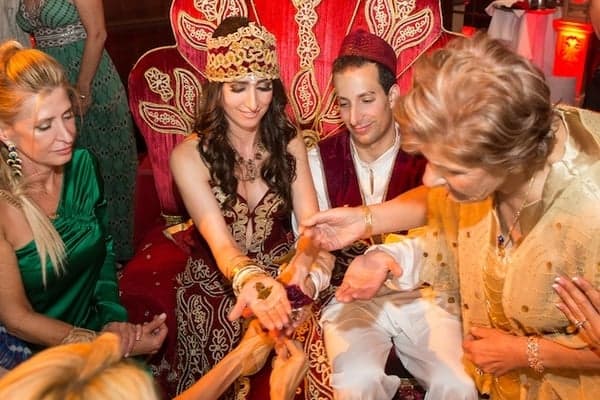
The ‘henna’ or ‘kina’ night is a smaller celebration that takes place a week or two weeks before the wedding. The bride dresses in a gown of her choice (usually red) and celebrates with her female friends and family. Later in the evening, she changes into a traditional outfit called a bindalli.
The bride is seated in the centre and wears a red veil over her head after applying the henna. It begins with an elder leading the ceremony in which single women walk around the bride chanting traditional songs.
The objective is to make the bride cry. Usually, a ballad about missing family succeeds. Once the bride has been moved to tears, the ceremony continues. Then, the senior family member is entrusted with applying henna on the bride’s palm, but not before the mother-in-law places a gold coin in her hand for good luck.
It is believed that a long-lasting love and protection from tragedy is what a Henna night ensues.

The red ribbon, or maiden’s belt, is tied around the bride’s waist by her father or brother before she leaves home. Traditionally it symbolised purity and the family’s blessing; today it’s worn as a cultural tribute, entirely the bride’s choice.
This ceremonial journey from the bride’s house to the groom’s home is open to the public. Guests walk to get the bride if it’s not too far away or drive if it’s too far away. Drums and pipes accompany the parade. The groom is not permitted to follow the wedding procession in some areas. She joins the procession as it makes its way to the groom’s residence.
This is when the red ribbon is tied, and the bride then bids her goodbyes to those who remain at home. A male family member may occasionally block the entryway to lighten things up.
The bride or a younger brother sits on the wooden box containing the bride’s dowry to prevent the bride from leaving. This final obstacle is overcome thanks to a tip from the groom’s family, and the bride departs from her parents’ house.

If you’d love to honour the red ribbon at your own celebration, our Wedded Concierge team can plan it with you end to end.
When the groom’s parents formally visit the bride’s family to ask for her hand. The bride offers Turkish coffee with sugar to everyone except the groom.
The bride adds salt to the groom’s coffee, forcing him to suffer the taste and drink it all (without any facial expressions) as a gesture of his love and gratitude for his spouse. After a coffee with salt, which symbolises the groom’s readiness to put up with everything his future bride throws at him, the groom presents the bride with a simple gift, such as flowers and a simple ring for the engagement.

Planning a Turkish wedding? Check out our finest Turkish wedding destinations so you can celebrate in style.
The legal wedding ceremony is usually held at the register office; however, if requested, the registrar can also attend the wedding venue or location.
The bride and groom queue up in the registry office after the ceremony to collect congratulations and presents, generally in the form of money and gold. They try to step on one other’s feet after the wedding and argue that whoever is faster will have the last word in the marriage.

The bride writes the names of her single friends on the sole of her shoe before the wedding ceremony. Alternatively, the bride’s single relatives and friends can sign the shoe. After a night of dancing, whoever’s name is the first to be rubbed out is destined to be the next to marry.

The takı töreni is the heart of the reception and arguably Turkey's most beloved wedding tradition. As the couple stands together, often with the groom wearing a red sash, guests line up to pin gifts directly onto them: gold coins (çeyrek altın), gold bracelets (bilezik), and folded banknotes. An announcer frequently calls out each guest's name and gift as it's pinned. Far more than a gesture, the takı gives the newlyweds a real financial foundation to begin married life, which is why gold, not homeware, is the classic Turkish wedding gift.
No Turkish wedding ends quietly. The celebration spills into a generous feast and hours of communal dancing, most iconically the Halay: a line or circle dance where guests link hands or shoulders and move together to the beat of the davul (drum) and zurna (reed pipe). Different regions favour their own folk dances, but Halay is the most widespread, and its meaning is the whole point of the day — unity, belonging, and a community celebrating as one.
In more traditional and rural weddings, a decorated flag (bayrak) is raised at the groom's family home to announce the celebration, sometimes topped with fruit or a mirror for good fortune. On the wedding day, the gelin alma (fetching the bride) becomes a joyful convoy of cars winding through town with horns honking, announcing to everyone that a new marriage has begun.
A traditional Turkish wedding is a multi-day celebration. It begins with the formal proposal (Söz) and engagement (Nişan), followed by the women's Henna Night (Kına Gecesi). The wedding day itself includes the bridal procession, the civil ceremony, and a large reception featuring the takı gold-pinning ceremony, a feast, and communal Halay dancing.
Weddings in Turkey are an excuse for everyone (particularly ladies) to dress up. You should go for something bright, formal, and stylish. There will be a lot of high heels, floor-length gowns, and plenty of make-up and jewellery. However, make sure your shoes are comfortable because the ceremony is often cocktail style (which requires a lot of standing) and ends with a lot of dancing afterwards.
Traditionally, the groom’s family pays for the wedding.
Gold is the traditional Turkish wedding gift. During the takı ceremony, guests pin gold coins, gold bracelets, and money onto the couple to help them start married life. Cash is equally welcome, and physical homeware gifts are far less customary than in Western weddings.
Expect a warm, lively, and long celebration. Dress formally and stylishly, but wear comfortable shoes — there's a lot of standing and dancing. Bring gold or cash to pin during the takı ceremony, be ready to join the Halay, and come hungry for a generous feast.
Legally, one. Turkey has been a secular republic since the 1926 Civil Code, which recognises only monogamous civil marriage. Polygamy is not legally valid, though it's a common question given the country's history.
The red ribbon, or maiden's belt, is tied around the bride's waist by her father or brother before she leaves home. Traditionally it symbolised purity and the family's blessing; today it's worn as a cherished cultural tribute, and whether to wear it is entirely the bride's choice.
Different regions favour a particular folk dance over others. The most popular traditional dance for weddings is Halay. This is a dance signifies unity and cooperation.
Dreaming of a wedding abroad? Explore our destination wedding packages at nine hand-picked luxury resorts, planned end to end by a Wedded Wonderland advisor.