Ask anyone who has been to a Mexican wedding and they will start with the hour it went sideways at midnight. Underneath the noise is a structure, and that structure is sponsorship: padrinos and madrinas each fund one part of the day, from the thirteen coins to the lasso to the bouquet. Here is who pays for what.
In Mexico, the journey to marriage begins with “la pedida de mano” or the proposal. Unlike in some other cultures where the proposal is an intimate moment between the couple, in Mexico, it involves the groom’s family visiting the bride’s family to formally ask for her hand in marriage. This tradition emphasizes the importance of family unity and respect, as both families come together to discuss the couple’s future.
During the wedding ceremony, the couple exchanges 13 gold coins known as “arras.” These coins symbolize the groom’s commitment to providing for his bride and their future together. The act of exchanging the arras signifies the couple’s willingness to share their material possessions and support each other throughout their married life. There are thirteen of them for a reason: one for each of the twelve apostles, and one for Christ.
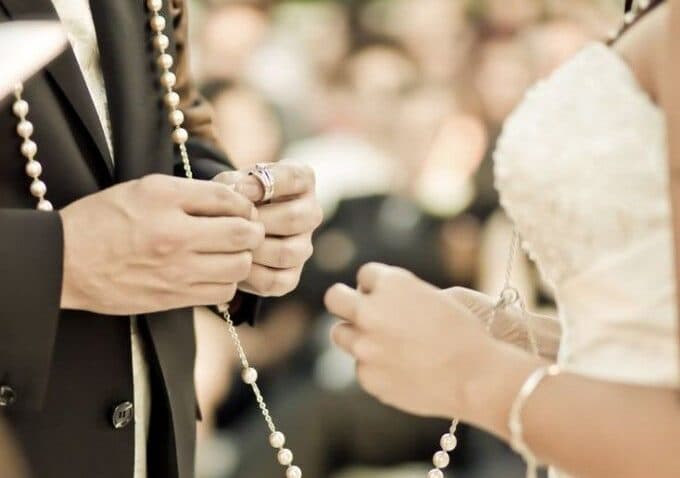
El Lazo is a symbolic gesture that represents the eternal bond between the couple. During the ceremony, a decorative rope or rosary is placed in the form of a figure-eight around the couple’s shoulders, creating a loop. This loop is a visual representation of their unity and signifies their commitment to remain together throughout their lives.
In Mexican weddings, the bride typically has a “madrina de ramo” or a flower bouquet sponsor. This role is usually fulfilled by a close friend or family member who takes care of the bride’s bouquet expenses. The madrina de ramo plays an essential part in the wedding ceremony by walking down the aisle alongside the bride and holding the bouquet until it is time to exchange the flowers with the groom.
La Hora Loca, or the Crazy Hour, is a lively and energetic tradition that takes place during the wedding reception. Typically held towards the end of the celebration, it involves the distribution of masks, props, and noisemakers to the guests. The goal is to create a festive and joyous atmosphere where everyone can let loose, dance, and have a great time.
The tradition of La Serenata dates back to colonial times and is still prevalent in Mexican weddings today. It involves the groom serenading his bride the night before the wedding, accompanied by a mariachi band or a group of musicians. This romantic gesture is a way for the groom to express his love and affection for his soon-to-be wife.
In many Mexican weddings, the rings are presented to the couple on a decorative pillow known as “el cojín.” The pillow is usually elaborately designed and adorned with intricate details and symbols that hold cultural significance. The presentation of the rings on the cojín adds a touch of elegance and tradition to the ceremony.
La Vibora de la Mar, also known as “The Sea Snake,” is a playful and interactive game that is often played during the reception. The couple stands on chairs while their guests form two lines, each holding hands and weaving in and out to create a human tunnel. The goal is for the couple to make it through the tunnel without falling, symbolizing the support and unity of their loved ones.
After the main wedding reception, Mexican couples often have a second celebration known as “la tornaboda.” This informal after-party allows the couple to continue the festivities with close friends and family members. It is a time for late-night dancing, indulging in delicious street food, and creating lasting memories.
As the wedding celebration comes to an end, the newlyweds make their grand exit and embark on a symbolic “escape” known as “los novios en fuga.” The couple runs away from the venue together, followed by their guests. This tradition symbolizes the beginning of their new life as a married couple and the exciting journey that lies ahead.
READ MORE: 10 of the Oldest and Most Fascinating Wedding Traditions in the World
To explore the latest trends, expert advice, and breathtaking inspiration in the world of weddings, don’t miss out on the Get Wedded in Australia 2023-2024 digital magazine! Whether you’re a bride-to-be or a wedding enthusiast, this magazine is a must-read.
Below, browse and read your free copy of the Get Wedded in Australia 2023-2024 digital magazine today.
Padrinos and madrinas are sponsors, not just witnesses. Couples ask different people to take on individual parts of the day: the arras, the lazo, the rings, the bouquet, the cake, sometimes the venue. Each sponsor pays for their piece and presents it during the ceremony. Being asked is a real honour, and it is the reason a Mexican wedding can be large without one family carrying the whole cost.
Before the couple leaves for the church, both sets of parents give a formal blessing. It happens at home, it takes a minute, and in most families it is the part people cry at rather than the vows.
Guests pin banknotes to the couple's clothes for a dance. It funds the honeymoon, and it gets competitive once the first few notes are on.
Mole is the wedding dish, most often mole poblano, and in some regions the wedding is where a family recipe gets judged. Expect it late, after the dancing has started.
Formal, and expect to move between outdoors and indoors more than once. Avoid white, and avoid red. Cash is a normal and welcome gift. And if you are asked to be a padrino, the answer is yes.
Planning a wedding in Mexico and want the vendors who actually deliver? Speak with a Wonderland Luxury Advisor, browse destination weddings in Mexico, or read our guide to wedding venues in Mexico.
Search real weddings, venues and vendors from around the world.
Search Wedded Wonderland