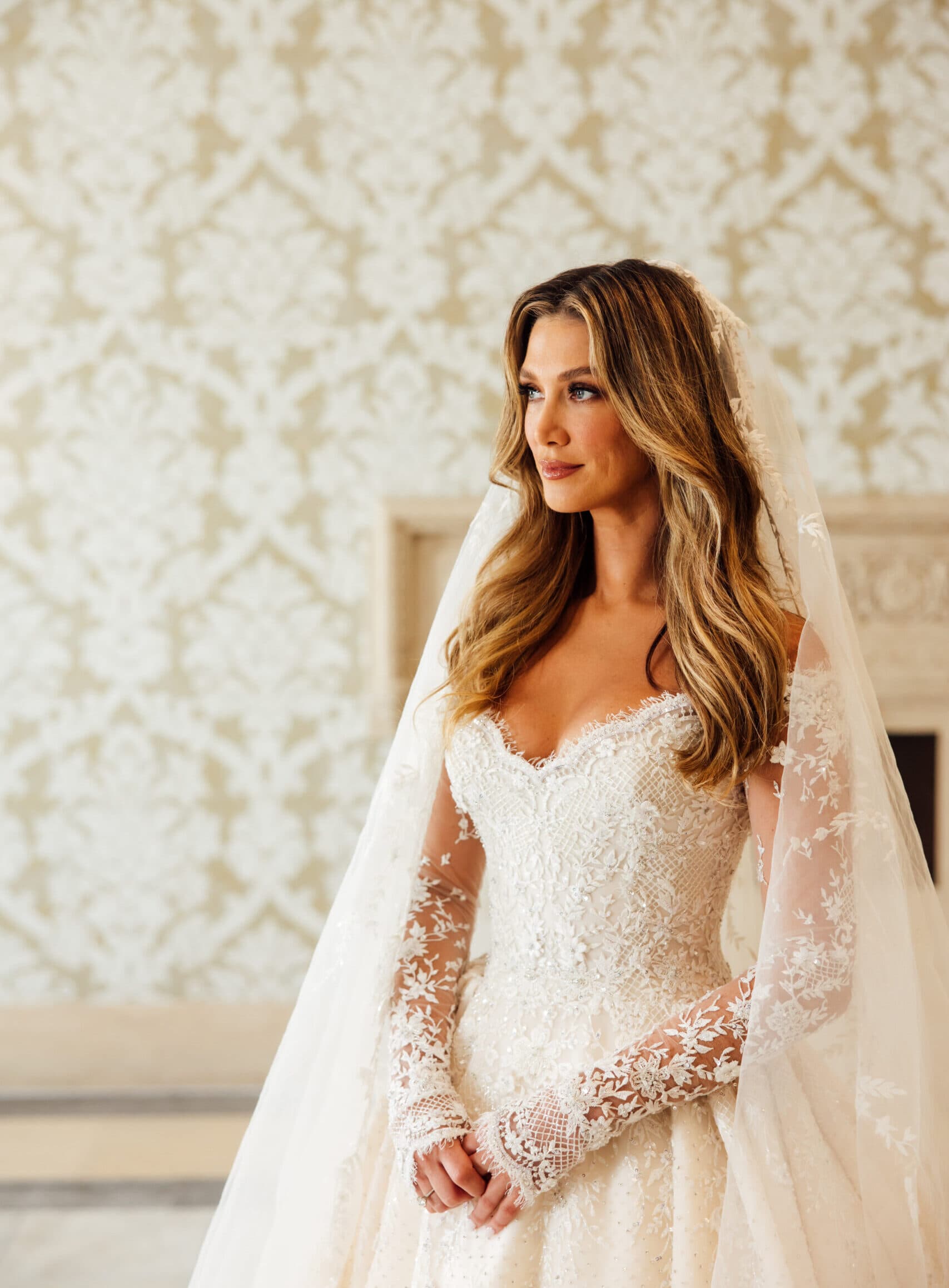
Some brides shop. Some commission. Kassi Ashton created.
When the country singer married longtime partner Travis Myatt in an intimate Key West wedding, the celebration was layered with symbolism, softness, and intention, but the true centerpiece wasn’t just the setting or the ceremony. It was the gown. A dress Ashton designed and constructed herself over four months, transforming fabric, memory, and fantasy into something that felt less bridal look and more living creature.

Set against the historic Ernest Hemingway Home on April 19, the wedding welcomed just 45 guests and leaned into an “old world” mood, moody, textural, and deeply personal. But if the venue set the stage, the gown told the story.
Why the most meaningful weddings are the most specific ones.
Key West wasn’t a random destination for Ashton and Myatt. It was the place where they first crossed paths years earlier at a songwriting festival, long before proposals and Pinterest boards entered the picture.
In an interview, Ashton shared that they envisioned a wedding that felt immersive rather than overwhelming—a week spent with their closest friends, followed by a ceremony with immediate family in a place that already held emotional weight. The result was a multi-day celebration that unfolded naturally: a sunset catamaran welcome party, a ceremony grounded in ritual, and a relaxed brunch the next morning.
The energy throughout was unhurried and romantic. Nothing felt rushed. Nothing felt staged.
Proof that intimacy is the real flex.
The ceremony itself was layered with meaning. Ashton and Myatt read vows handwritten into antique books while standing on mirrored Turkish tapestry rugs, a visual nod to balance and reflection. Their rings, custom-designed, were passed among guests beforehand, allowing loved ones to speak wishes, prayers, and wisdom into them.
In an interview, Ashton reflected on how this ritual created a rare pocket of privacy during the ceremony, giving the couple space to truly see one another without all eyes fixed on them.
Music by harp and cello softened the moment, while songwriter Barry Dean officiated, grounding the ceremony in creative kinship rather than formality.
It was spiritual without being stiff. Emotional without being performative.
This wasn’t bridal fashion, it was world-building.
Ashton didn’t want to look like a bride in the traditional sense. She wanted to look like a being.
In her own words, she envisioned “an ethereal and whimsical creature” who appeared as if she had walked straight out of the ocean, adorned with fragments of another world. Her inspirations ranged from antique ballet costumes to fantasy editorials, with deconstructed runway silhouettes from Alexander McQueen guiding the tone.
The foundation of the gown began with a rare vintage Italian guipure lace, metallic pearl-threaded and embroidered with three-dimensional petals, that Ashton personally traveled to Florida to collect after it was sourced from a Paris textile expo. She described it as resembling a glistening fisherman’s net, delicate but alive.
She paired the lace with champagne metallic crinkled silk tissue and ivory cotton voile, carefully balancing shimmer and softness. The metallic fabrics created a watery glimmer, while the voile frayed and draped into the “weepy swath” effect she was chasing.
The gown itself was constructed in two parts: a corseted short party-dress top layer and a detachable ballgown skirt beneath it. Instead of traditional boning or heavy tulle, Ashton built the structure using metal mesh, allowing for volume and shape without discomfort.
One of the most intimate details? The bodice was lined with a vintage cotton bedsheet she’d owned since childhood, chosen for both physical ease and emotional grounding.
Hand-sewn silk tissue mimicked the curls and waves of the ocean, while individual lace florets were stitched along the bust and edges so their fringe would hang like enchanted seaweed. Champagne Swarovski crystals were sewn in delicate lengths from within the petals, catching the light with subtle movement.
And then came the crown.
Ashton’s headpiece, her favorite element, was made from gathered shell-like shapes of silk tissue, fringed lace florets, and hand-molded strands of Swarovski crystals. A draped Juliet veil, also crafted from silk tissue, completed the look.
She worked on the gown while repeatedly watching a 1994 recording of The Royal Ballet’s Sleeping Beauty, letting movement, music, and memory guide her hands.
The result wasn’t just a dress. It was her favorite piece she’s ever made.
Because warmth always wins.
Dinner was served family-style, with dishes passed hand to hand to encourage conversation and closeness. The menu leaned comforting and generous, followed by a spread of desserts from a beloved local bakery, displayed on antique silver stands and styled freely.


A 17th-century alchemical symbol known as “The Wedding” appeared throughout the celebration, a motif that now lives permanently, tattooed on both newlyweds.

The night ended not with a formal send-off, but with a come-as-you-are karaoke after-party at their favorite local bar.
Kassi Ashton’s wedding wasn’t about excess. It was about authorship, of her dress, her rituals, and her narrative. In designing her own gown, she didn’t just reject convention; she expanded what bridal expression can look like.
This was a wedding built by hand, memory, and intention. And that kind of beauty doesn’t fade.
For more celebrity weddings, fashion-led bridal moments, and celebrations that prioritize meaning over noise, follow Wedded Wonderland. Join our complimentary Wedded Concierge service or explore our Wedded Partners Global Listing, and let’s get Wedded!
Search real weddings, venues and vendors from around the world.
Search Wedded Wonderland