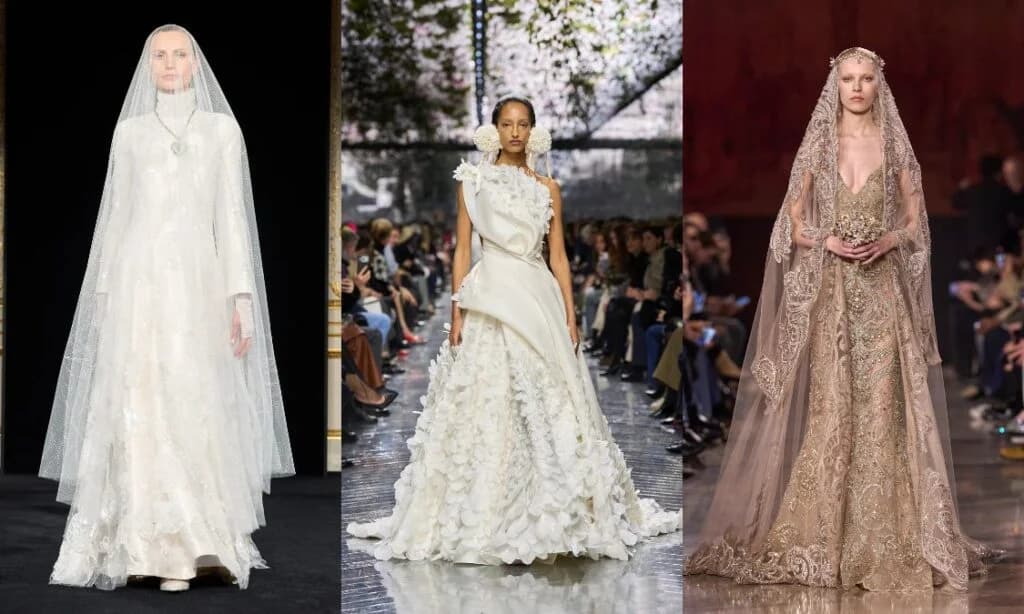
If Haute Couture Week Spring/Summer 2026 had a relationship status, it would be “it’s complicated, but beautiful.” Across Paris, designers leaned hard into feeling. Not trends, not algorithms, not virality for virality’s sake. This was a season about emotion, memory, and meaning, filtered through gowns so painstakingly made they almost felt alive. As a wedding expert watching couture unfold, one thing was clear. These collections weren’t just runway moments. They were future ceremony looks, reception dresses, after-party fantasies, and red-carpet vows to craftsmanship itself.
From debut nerves to legacy-defining moments, this couture week reminded us why these clothes matter. Let’s break it down, house by house.


Jonathan Anderson’s first couture outing for Dior felt like a quiet inhale after a loud exhale. Following a divisive menswear showing, Anderson returned with a collection rooted in nature, material, and form. Florals appeared not as prints, but as sculptural ideas. Dresses ballooned into rounded, ceramic-like silhouettes inspired by the work of ceramicist Magdalene Odundo. Think vessels, not dresses.
Some gowns wrapped the body in birdcage-like spheres. Others paired transparent vest tops with gathered skirts, exposing the mechanics of couture rather than hiding them. The result was thoughtful, strange, and surprisingly tender. Like a bride choosing an unconventional gown because it feels right, not because it photographs well.


Hobeika didn’t just stage a show. He delivered a meditation. L’AMOUR unfolded like a whispered vow, reminding us that love is not spectacle, but action. The gowns reflected that softness. Flowing silhouettes, gentle structures, and fabrics that moved like breath.
Rather than overwhelming embellishment, the power came from restraint. This was couture for brides who believe intimacy is the ultimate luxury. The kind of dresses that don’t demand attention, but earn it.


Ashi Studio delivered the darkest romance of the week. Corsets crafted using 18th-century techniques cinched waists into dramatic bell shapes. Peplums and skirts curved into shell-like volumes, evoking Victorian mourning dress with a modern edge.
Hair became jewelry, braided into sculptural forms or trailing down backs like spines. Ghostly handprints appeared beneath layers of gauze. Skeleton keys, death moths, and antique doorknob clutch handles added a macabre flourish. The backs of gowns took center stage, pearl-drenched bustles and vertebrae-aligned tassels turning away from the audience as an act of seduction.
This was couture for brides who don’t want fairytales. They want poetry, obsession, and a little danger.


Elie Saab’s Golden Summer Nights of ’71 proved that couture can loosen up without losing its shine. Inspired by Seventies jet-set glamour, the collection shimmered in bronze, blush, gold, and chocolate tones. Despite intense embroidery, the clothes felt breezy. Crop tops were backless. Gilets were thrown over gowns like afterthoughts.
Tank tops paired with skirts emerged as a key silhouette, suggesting a future where couture feels wearable, even cool. The closing bride in soft beige-rose felt more myth than tradition. Less “here comes the bride,” more “she arrived exactly when she meant to.”


Tony Ward treated light as a living thing. Dresses fractured and reflected it through faceted stones, layered embroidery, and architectural volumes. Every piece looked engineered rather than sewn, yet movement remained central.
This was couture for brides who love precision. Clean, luminous, and quietly powerful, these gowns felt like wearable architecture, perfect for ceremonies that value form as much as romance.


Gupta’s collection was philosophy made fashion. Sculptural gowns explored duality. Masculine and feminine. Human and divine. Red and white stood side by side, referencing Indian bridal tradition and Western ceremonies alike.
Clock components, cosmic embroidery, and serpentine structures turned dresses into metaphysical statements. A deeply personal moment came when Gupta’s life partner returned to the runway after surviving a fire, embodying resilience and rebirth. For modern brides seeking meaning beyond aesthetics, this collection spoke volumes.


Daniel Roseberry opened the week with pure intensity. Anger, ecstasy, and transcendence shaped jackets with scorpion tails, feathered bodices requiring tens of thousands of plumes, and sculptural accessories that bordered on art.
Birds became symbols of instinct and freedom. The dark Petit Palais setting amplified the drama. This was couture as emotional release. Perfect for brides who see fashion as performance, not decoration.


Silvana Armani’s debut couture collection following Giorgio Armani’s passing was understated and deeply moving. Celadon tones, relaxed tailoring, sheer organza, and wide-leg trousers defined the show.
The finale featured a wedding gown designed by Giorgio Armani himself, worn by his longtime muse. It was a moment that reminded everyone that weddings are about continuity. About carrying something forward with grace.


Alessandro Michele’s second couture collection treated each model as a character. Inspired by cinema and mythology, the show embraced spectacle. Feathered gowns, medieval silhouettes, and starlet fantasies collided.
Rather than a single vision, the collection celebrated individuality. Like weddings today, where tradition bends to personal narrative.
For more Spring/Summer 2026 couture insights, follow Wedded Wonderland. For structured planning and early alignment, Wedded Concierge begins with a dedicated strategy session prior to any recommendations.
Search real weddings, venues and vendors from around the world.
Search Wedded Wonderland